3 Days in Paris: A Practical First-Timer’s Itinerary
Paris has no shortage of famous landmarks, beautiful neighborhoods, and places you’ve seen in photos a hundred times. But with just 3 days in Paris, you’ll need to make some choices!
During our visit, we explored Notre-Dame, spent a morning at the Louvre, wandered the streets of Montmartre, and watched the Eiffel Tower sparkle after dark. We packed a lot into our three days, and I quickly learned that some sights deserved more time than we could give them.
If you’re planning your first trip to Paris, this itinerary will help you organize your sightseeing, decide which attractions to book in advance, and find a convenient place to stay. I’ll also share a few lessons from our visit, including what I’d do differently next time.
This post may contain affiliate links, which means I may earn a small commission at no extra cost to you.
Is 3 Days in Paris Enough?
My short answer? Not if you want to see everything!
Three days is enough to experience many of Paris’s biggest highlights, but you’ll barely scratch the surface of everything the city has to offer.
This itinerary is designed for first-time visitors who want to explore historic Paris, visit the Louvre, wander through Montmartre, see the Arc de Triomphe, and take in views of the Eiffel Tower.
One thing to keep in mind: our first day was mostly an arrival day after an overnight flight from the West Coast of the United States. That means we had two full days for sightseeing, and we packed them pretty tightly.
Be prepared for plenty of walking and time on your feet. Some attractions also involve stairs, and you’ll need to factor in time for public transportation between neighborhoods.
If you’d prefer a more relaxed trip, you can absolutely use this itinerary as a starting point and leave a few things for next time.
3 Days in Paris: Itinerary at a Glance
- Day 1: Arrival and Canal Saint-Martin — Get settled after your flight and enjoy a relaxed first evening in Paris.
- Day 2: Notre-Dame, Historic Paris, and the Eiffel Tower — Explore Notre-Dame, visit Sainte-Chapelle and the Conciergerie, and watch the Eiffel Tower sparkle after dark.
- Day 3: The Louvre, Montmartre, and Paris Viewpoints — Visit the Louvre, stroll through the Tuileries Garden, see the Arc de Triomphe, explore Montmartre, and photograph the Eiffel Tower from Trocadéro.
A note about pacing: Day 3 is ambitious, with several sights spread across different parts of the city. If you prefer a more relaxed pace, I’d move Montmartre to another day or skip a stop or two.
Day 1: Arriving in Paris and Getting Settled
Getting from Orly Airport to Central Paris
We flew overnight from the West Coast of the US, so I arrived pretty tired. Between managing our luggage, figuring out transportation, and dealing with a foggy brain, getting settled was a bit of a challenge.
My advice? Don’t plan a full day of sightseeing immediately after an overnight flight. Give yourself time to get to your hotel, figure out the transportation system, and recover a little.
Getting from Orly Airport to Central Paris
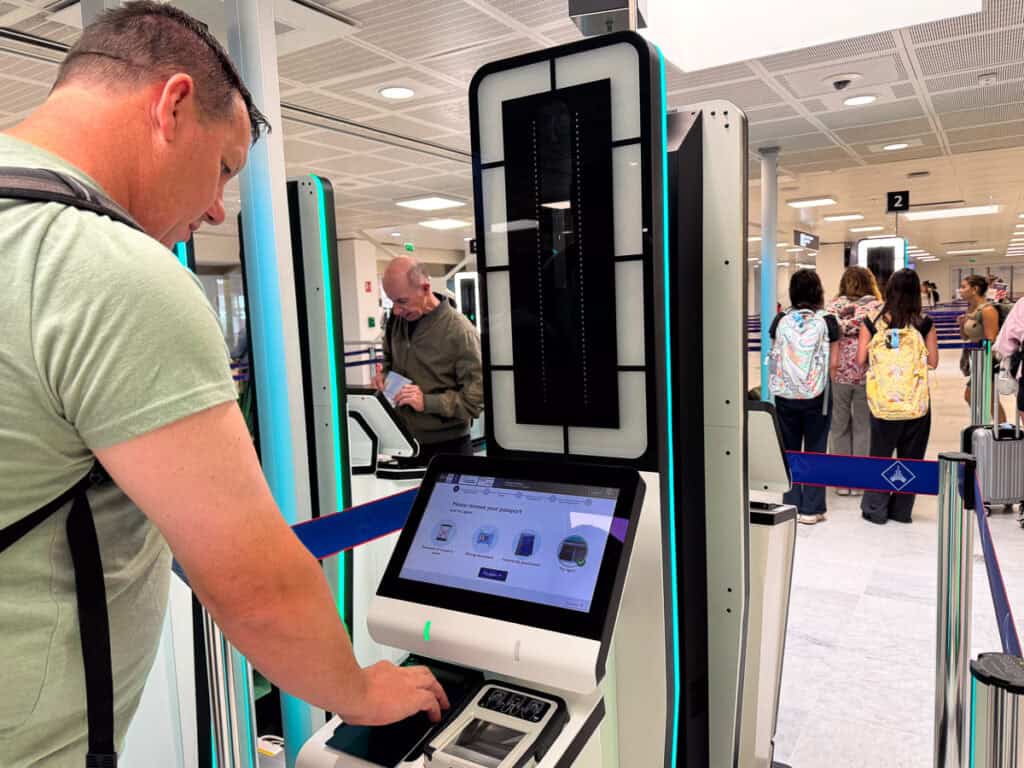
Arriving at Orly Airport and passing through the new Entry/Exit System (EES) was a breeze. Getting into the city to our hotel was another story!
We tried to buy a weekly Navigo pass at the airport, but the ticket office told us it wasn’t available there. I’d read that it might be an option, so I had a backup plan.
We took the T7 tram from outside the airport to a metro station, where we were able to purchase the weekly Navigo Semaine pass. The process was a little more involved than we’d expected because the pass requires a photo, similar to a photo ID. There was a photo booth at the station, but I came prepared with extra passport photos that just needed to be trimmed to size. We also paid a little extra for hard plastic covers to protect our passes.
Paris transit passes come with a few details worth sorting out before your trip. Ticket options, purchase locations, and requirements can be confusing, so I’d recommend checking the latest information before deciding which pass is right for you. Our experience is simply one example of how the process worked for us.
By the time we had our passes and caught the next train into the city, it was rush hour. Both the tram and train were crowded, and managing our large suitcases and backpacks on public transportation was a lot.
It was (almost) enough to make me want to become a carry-on-only girl. Almost.
Practical tip: Allow plenty of time to get from the airport to your hotel, especially after an overnight flight. Sorting out tickets, finding the right platforms, and navigating crowded trains can take longer than expected.
Where We Stayed: District République in the 10th Arrondissement
We stayed at District République in Paris’s 10th arrondissement, which worked well as a base for exploring the city. The nearest metro station was about two blocks away, making it convenient to get around.
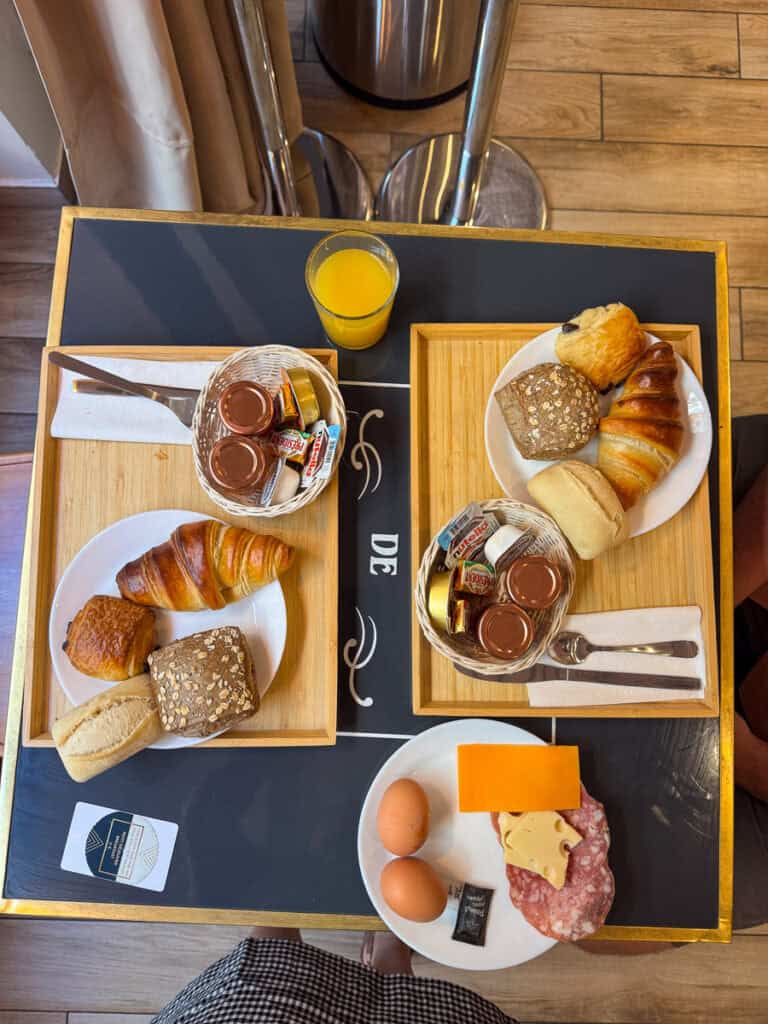
The hotel had a comfortable bed, effective air conditioning, and breakfast included. The staff were friendly, and we appreciated being able to store our luggage after checkout.
One minor downside was the Wi-Fi, which only allowed one device to connect at a time.
Overall, the location worked well for us. We wanted a convenient place to stay without paying a premium to be right in the middle of a major tourist area.
An Easy First Evening Around Canal Saint-Martin
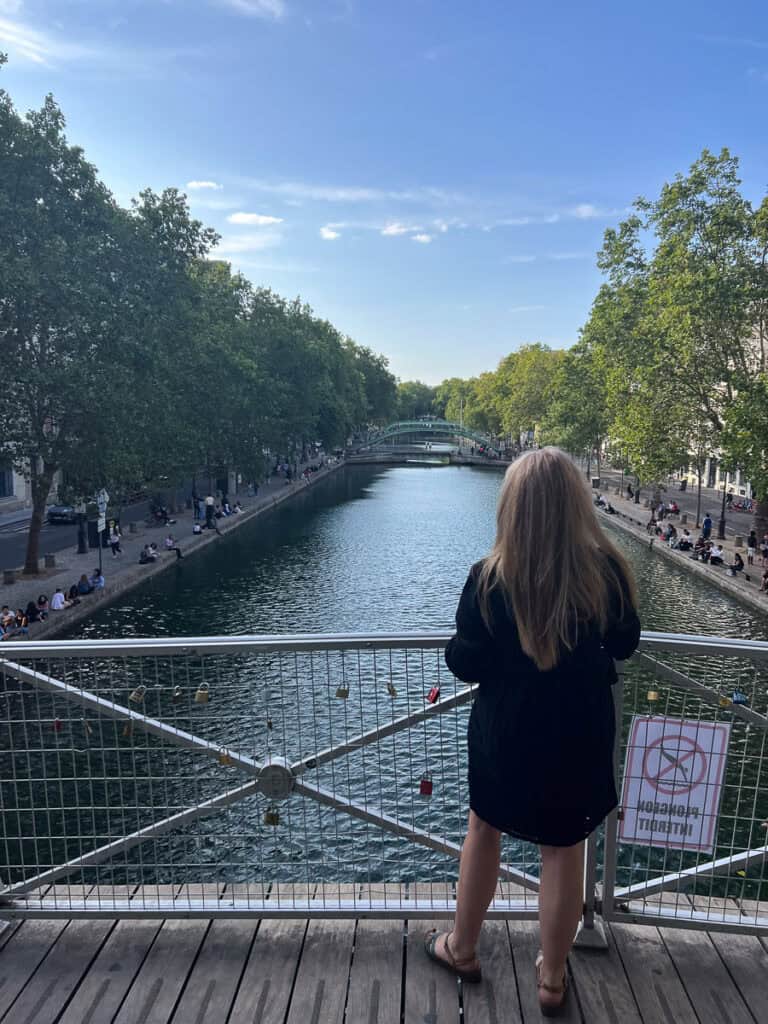
After checking in, we took a relaxed stroll. I was dying to get out and see a little of Paris!
Canal Saint-Martin was just a few minutes’ walk away, with waterside paths, neighborhood cafés, and plenty of dining options. It was a nice way to stretch our legs and get a first taste of the city without committing to a full sightseeing day.
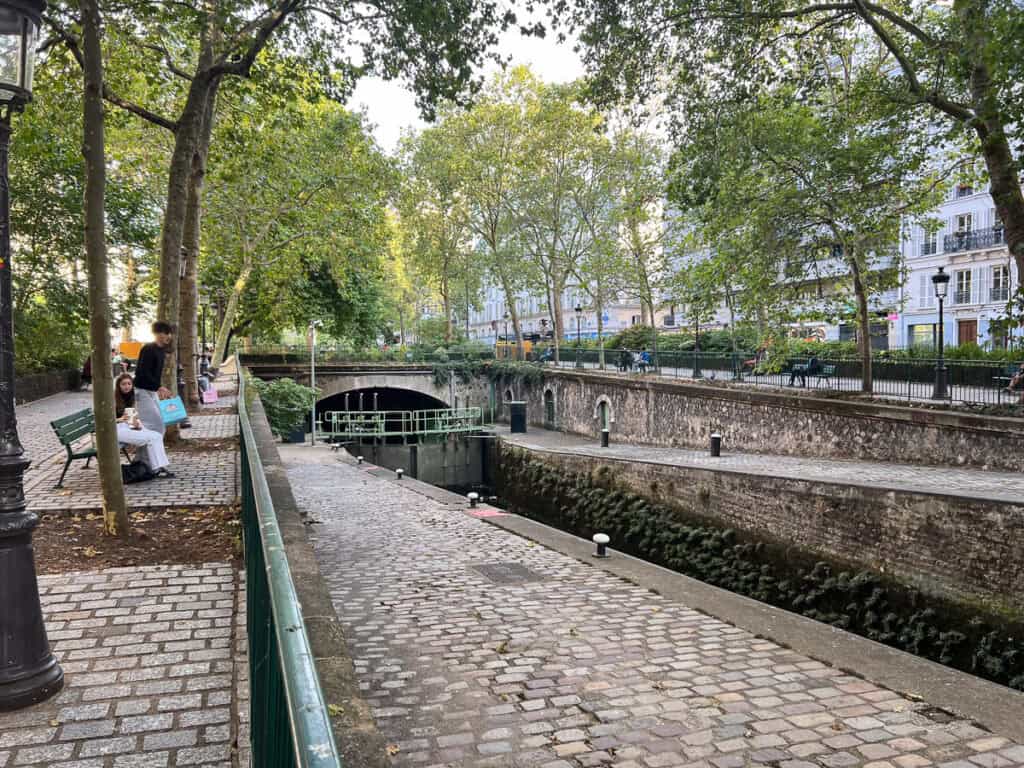
We found a little local spot to eat nearby and enjoyed a low-key evening before heading back to the hotel.
Practical tip: Keep your arrival day flexible if you can. A relaxed walk and an easy dinner might be all you’ll feel like tackling after a long flight.
Day 2: Notre-Dame, Historic Paris, and the Eiffel Tower at Night
This was a major sightseeing day for us, with historic landmarks, a relaxing break along the Seine, and an evening at one of Paris’s most recognizable sights.
A little advance planning will help you make the most of your time, especially if you want to visit several attractions around Île de la Cité before heading across the city to the Eiffel Tower.
Start the Morning at Notre-Dame Cathedral
Notre-Dame Cathedral is one of Paris’s most famous landmarks, and it’s well worth seeing from the inside as well as the outside.
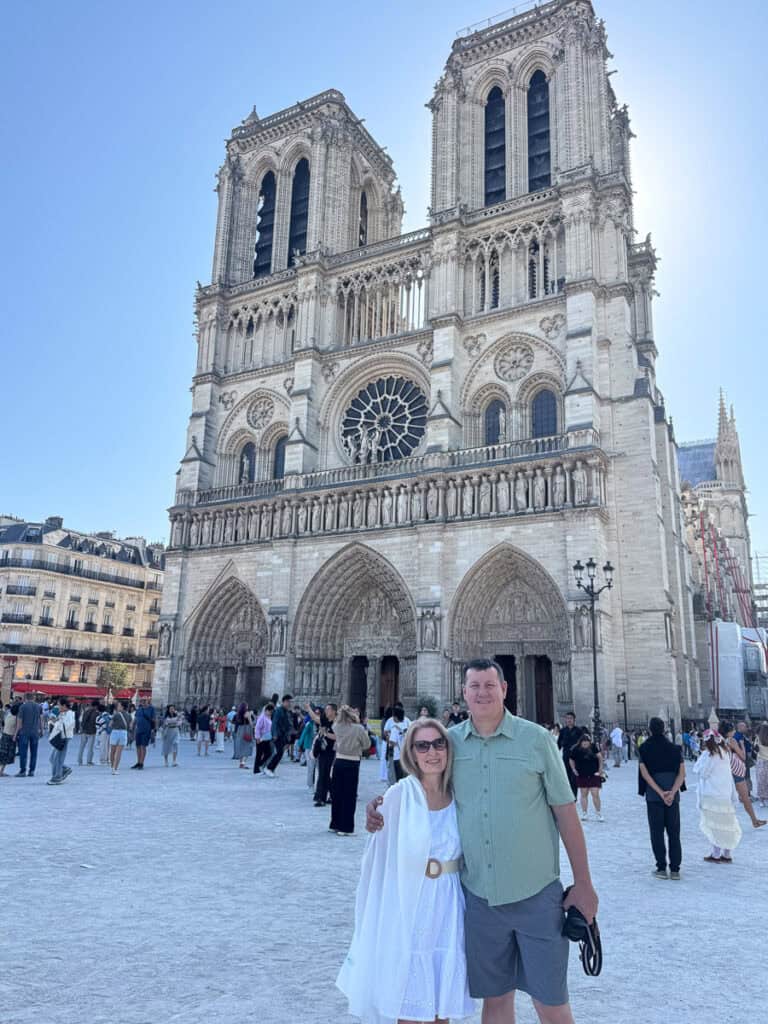
Admission is free. Before your visit, check the official Notre-Dame website for current entry arrangements and the option to reserve a free timed-entry slot. Reservations can help you plan your morning and may reduce your wait.
We had a 9 a.m. reservation and took a quick train ride to Île de la Cité before walking to the cathedral. The lines were short and moved efficiently, and we were able to walk right in.
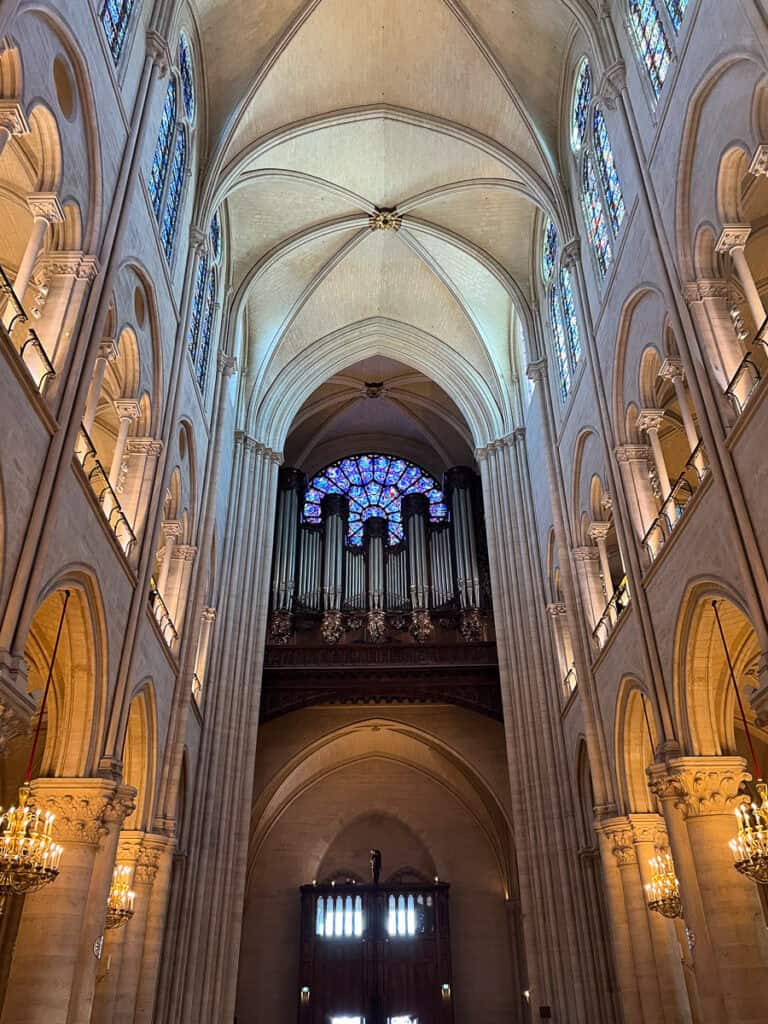
We spent a good amount of time wandering through the cathedral. The stained glass is stunning, and I practically filled my camera roll with photos!

We spent a good amount of time wandering through the cathedral. The stained glass is stunning, and I practically filled my camera roll with photos!
Notre-Dame dates back to the 12th century, when construction began in 1163. Over the centuries, the cathedral became one of the most recognizable examples of French Gothic architecture. A devastating fire in April 2019 destroyed the spire and much of the roof, prompting an extensive restoration. The cathedral reopened to visitors in December 2024.
There’s also a free mobile app with information about the cathedral. I read quite a bit of it ahead of our visit and found it informative, but I didn’t find it particularly useful while walking around inside. It was simply too text-heavy for me to follow during the actual visit.
One practical note: visitors are expected to dress respectfully, including covering their shoulders. During our visit, staff were handing out complimentary covers to people who needed them.
I always carry an inexpensive white gauzy scarf for cathedral visits in Europe, and it comes in handy for situations like this.
Visit Sainte-Chapelle and the Conciergerie

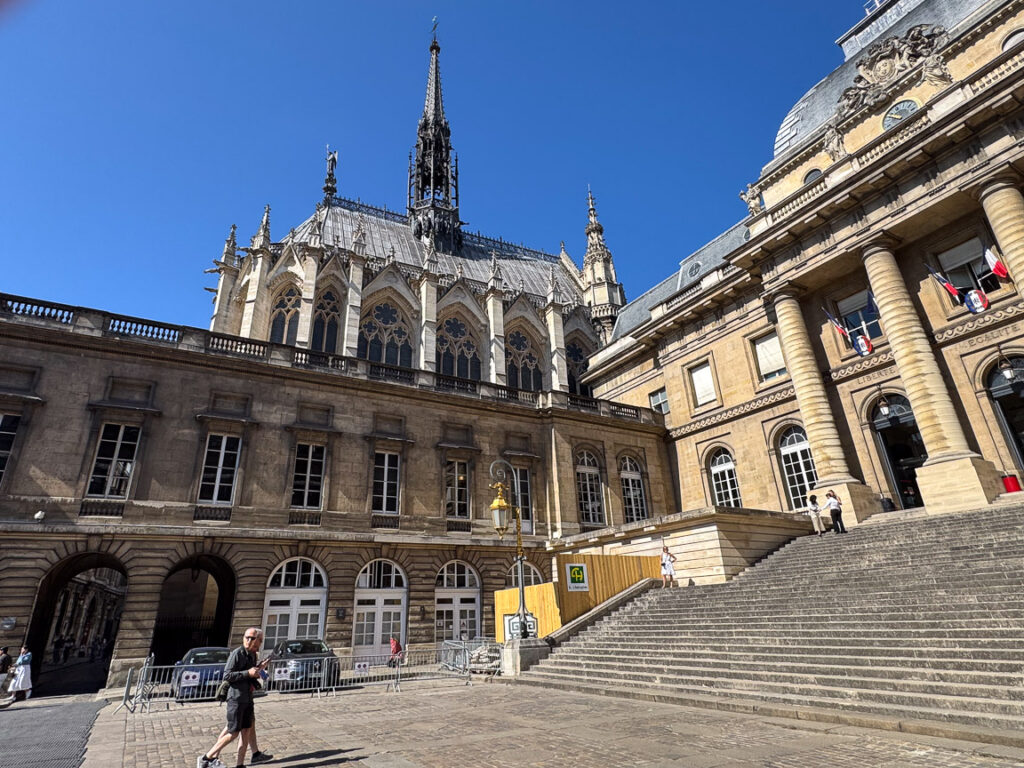
Sainte-Chapelle and the Conciergerie are just a short walk from Notre-Dame, both on Île de la Cité. Visiting them together makes sense geographically, but the experiences are quite different.
Sainte-Chapelle
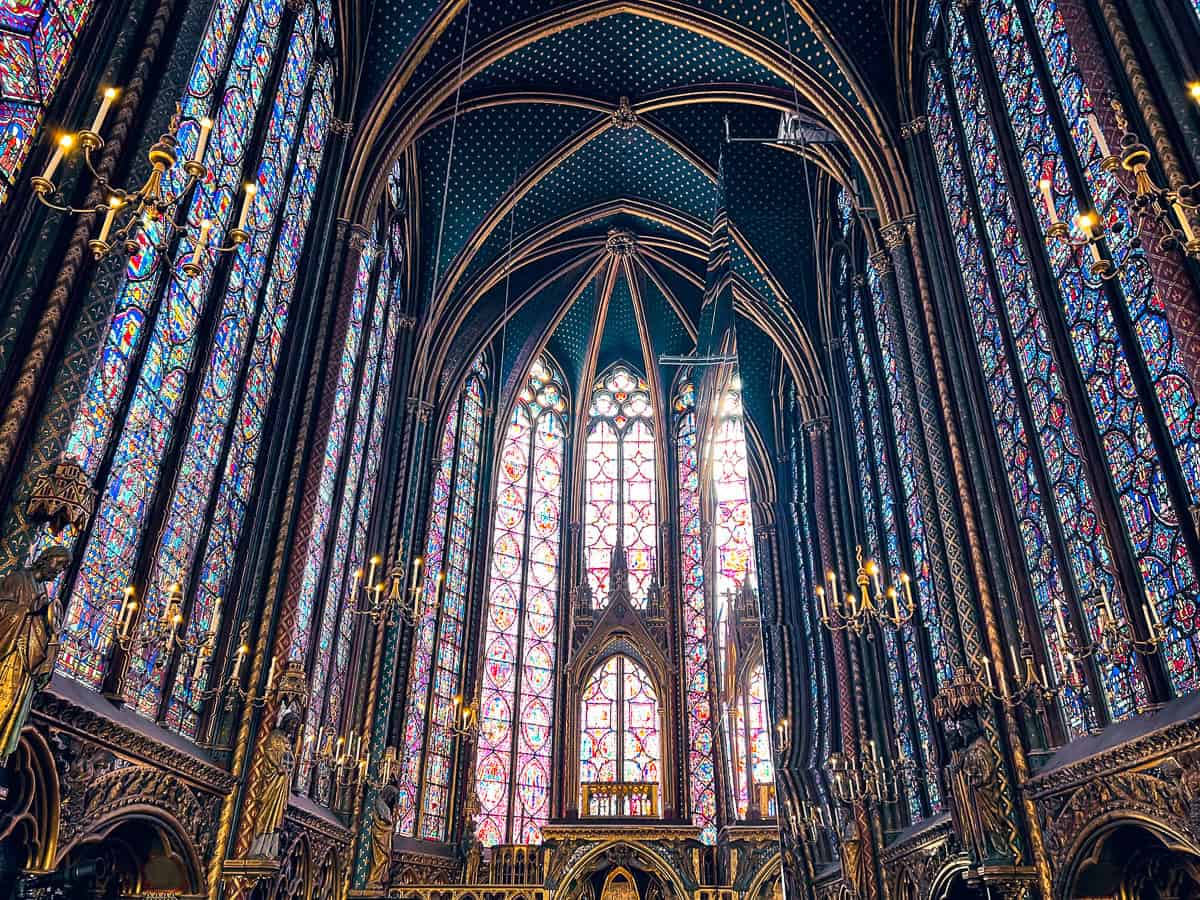
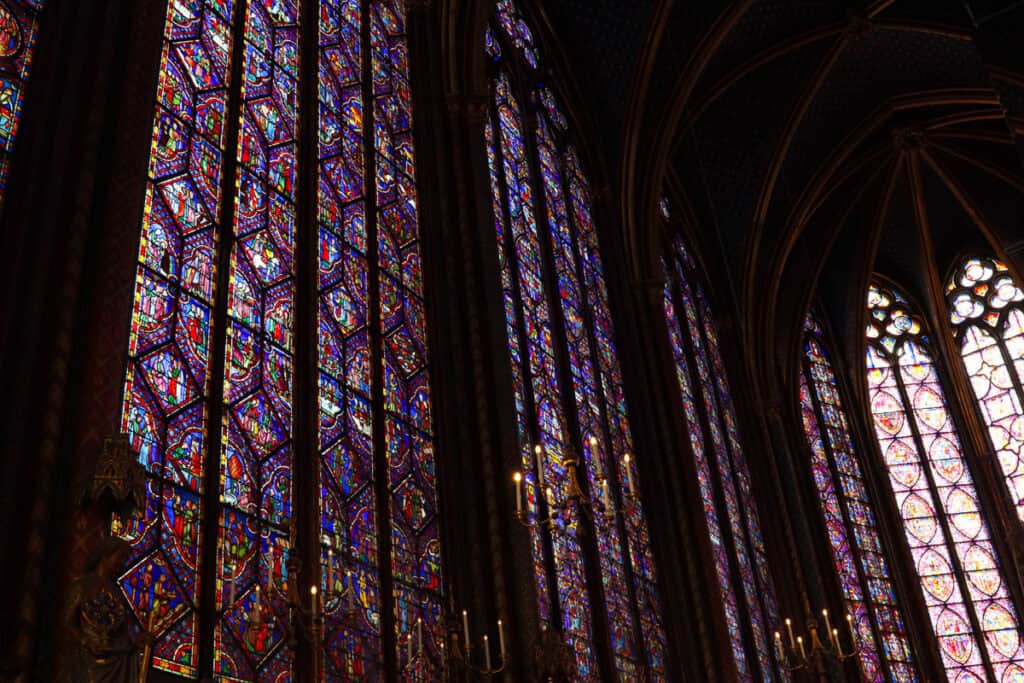
Sainte-Chapelle is a Gothic chapel built in the 13th century as part of the royal palace. Its soaring stained-glass windows depict biblical scenes and are the main attraction.
I was really looking forward to seeing the chapel and its beautiful stained glass. To be honest, though, it was a bit of a letdown after coming straight from Notre-Dame. The windows are beautiful, but I think visiting the two back-to-back made it difficult for Sainte-Chapelle to live up to my expectations.
I also waited too long to buy tickets directly, and they were sold out for our preferred time. I managed to purchase tickets through Tiqets instead. Third-party tickets can cost more, but they may be worth checking if an attraction is high on your must-see list and official tickets are no longer available. Compare the total price and entry conditions before booking.
The Conciergerie
Our ticket also included the Conciergerie, so we stopped there afterward. This turned out to be one of the highlights of our day!
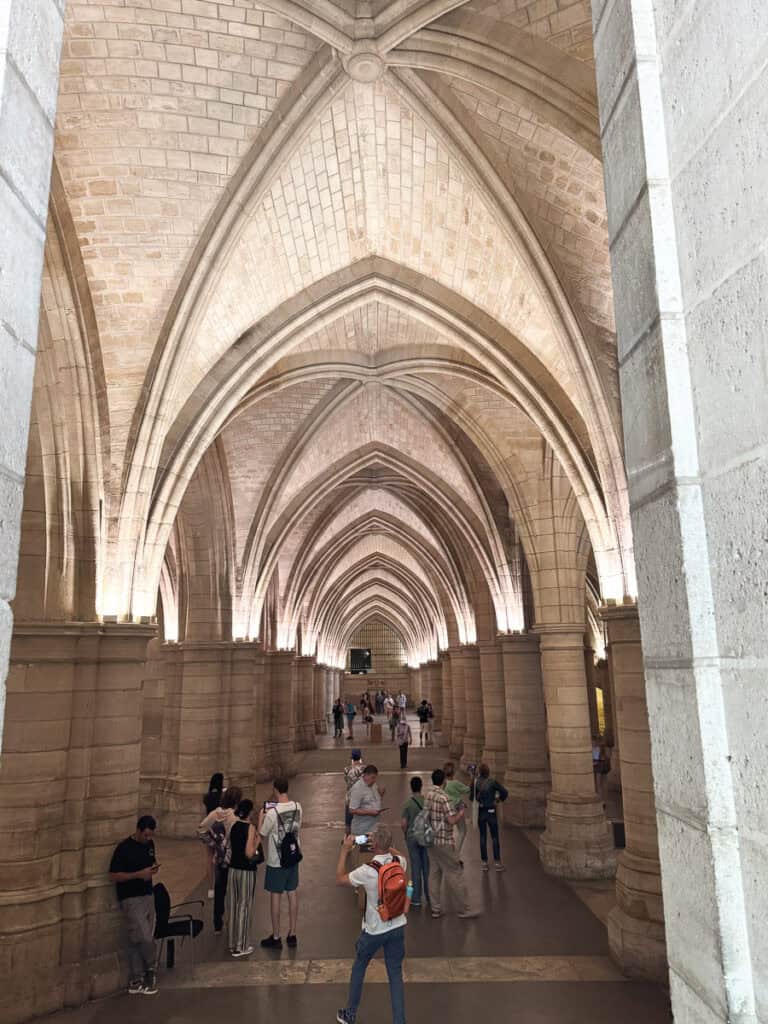
The Conciergerie served as part of the royal palace before becoming a courthouse and prison. During the French Revolution, it held many prisoners awaiting trial or execution, including Marie Antoinette.
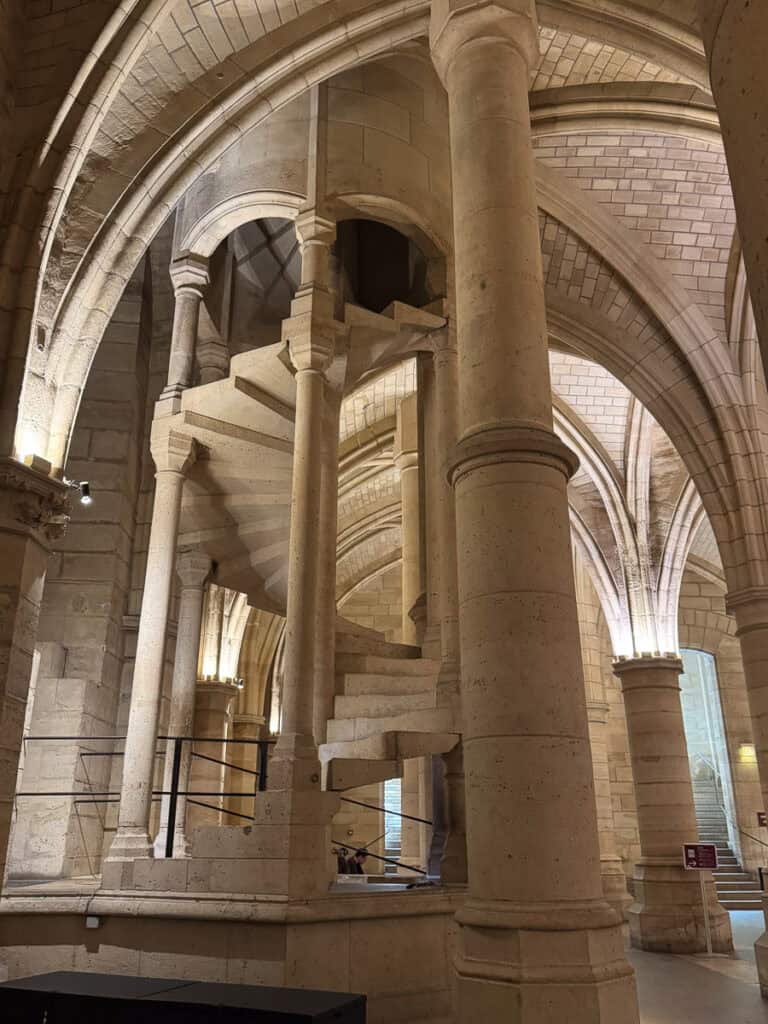
We found the building itself fascinating, from the impressive medieval halls to the rooms connected with its history as a prison. You can also see a memorial chapel associated with Marie Antoinette’s imprisonment.
A free interactive tablet experience helped bring the history to life. It was engaging for adults and would be a good way for older children to learn more about the people who passed through the building.
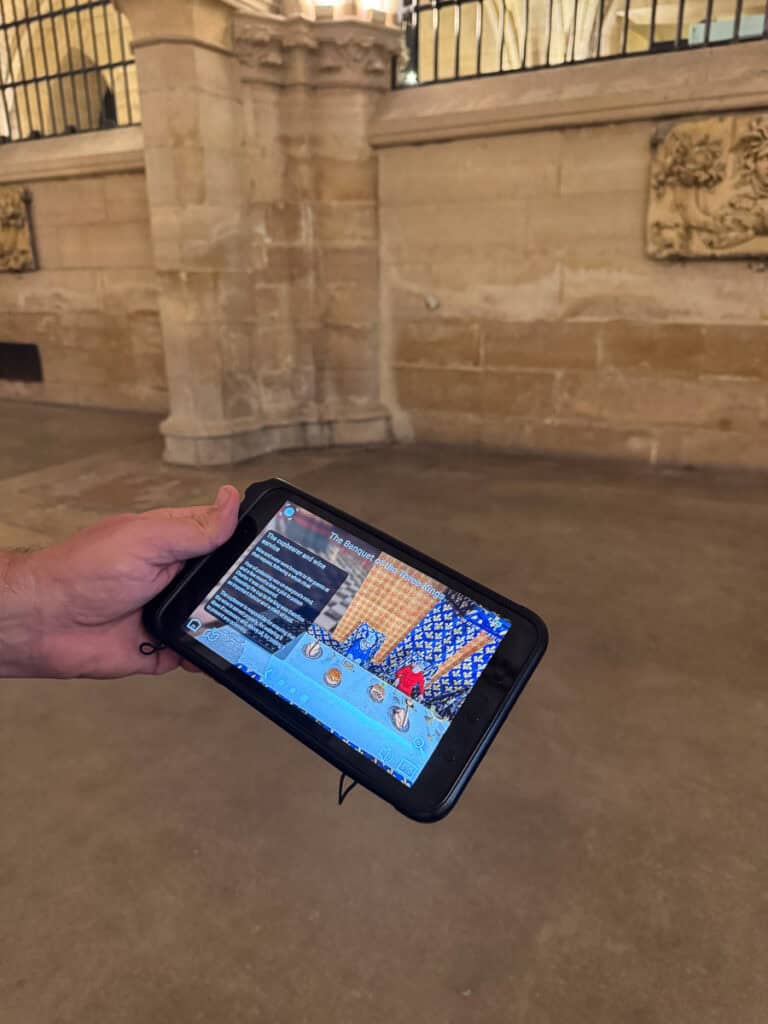
I went in expecting Sainte-Chapelle to be the highlight, but the Conciergerie surprised me. If you’re interested in French history, I’d make time for both.
If you’d prefer to explore with a guide, you can also book a guided tour combining Notre-Dame and Sainte-Chapelle.
Take a Break Along the Seine
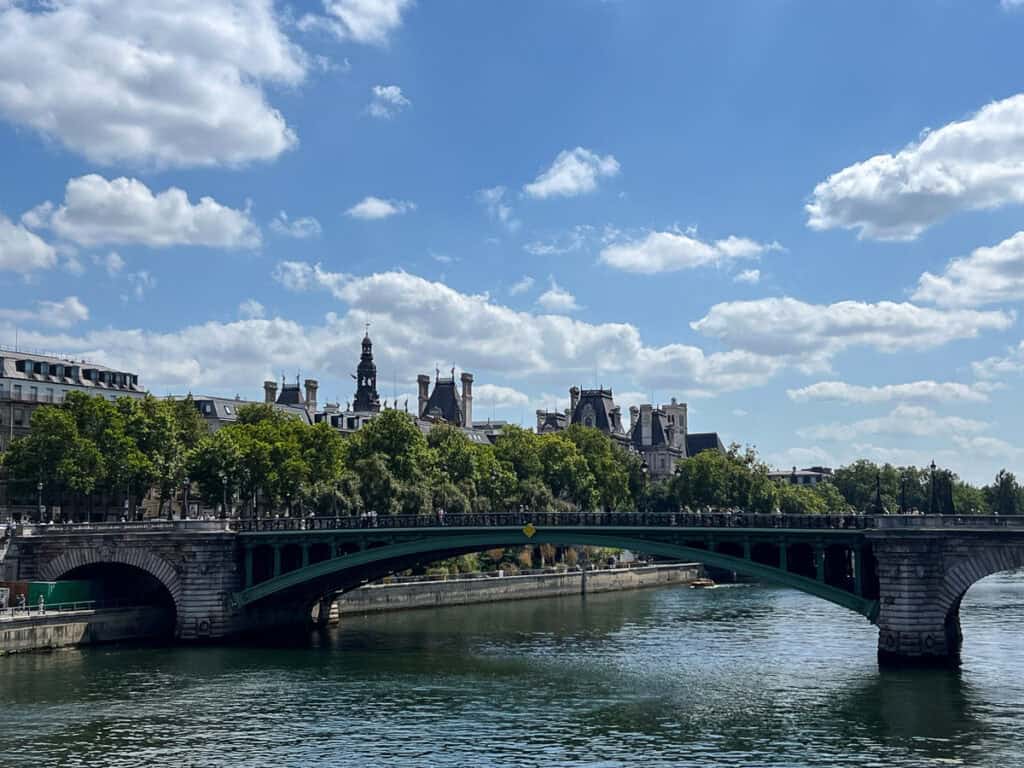
After all that sightseeing, a casual lunch along the Seine can be a welcome change of pace.
We walked past several promising grab-and-go cafés on our way to Notre-Dame, so we doubled back to choose something for lunch. The sandwiches and pastries displayed behind the glass made it easy to point to something that looked good.
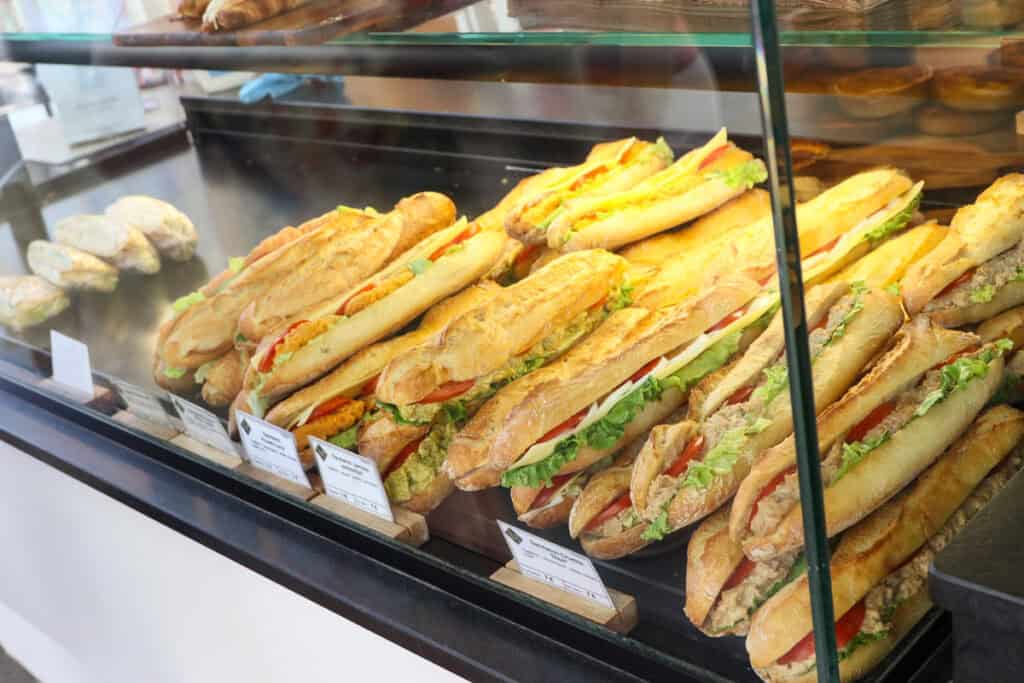
We ended up with a meat-and-cheese sandwich on a crusty baguette and some sort of cheesy croissant pastry. We carried our lunch to a nearby green space along the Seine, where we found some comfortable low-slung chairs in the shade.
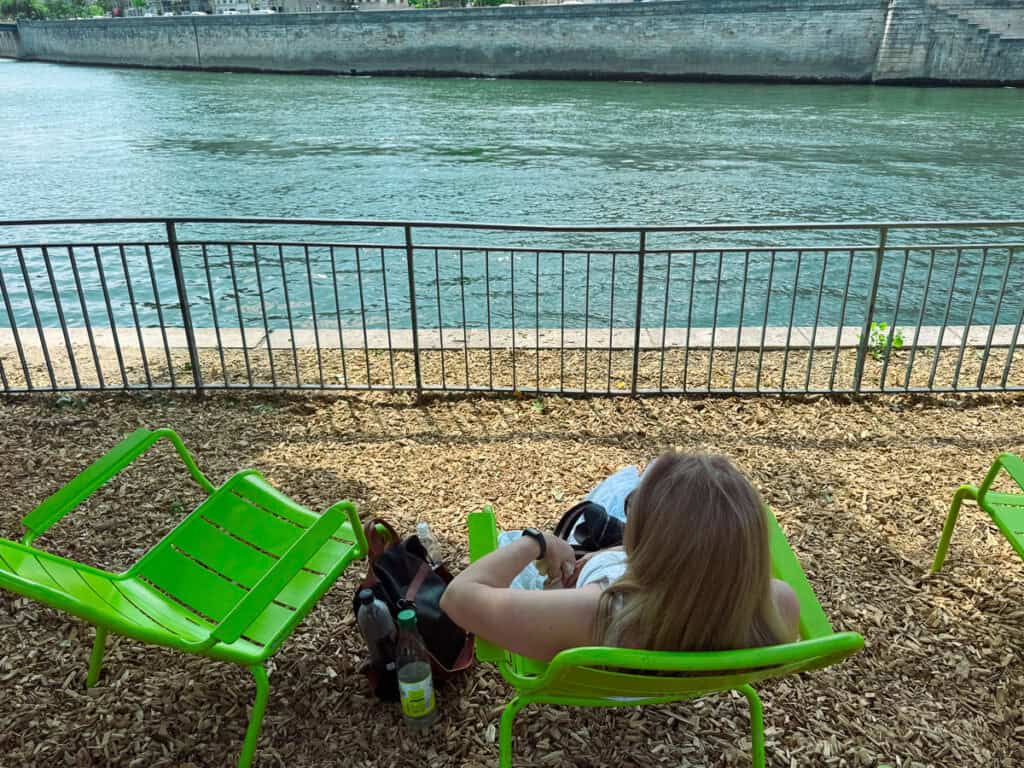
It was a warm day, so this felt like a real find.
One thing we really liked about Paris was how many green spaces and public seating areas we came across. It was nice to have places to sit, relax, and enjoy the city without having to pay for a café or restaurant.
Practical tip: You don’t need to plan every meal around a restaurant reservation. Picking up a baguette sandwich and finding a shady spot along the river can be a lovely Paris experience in its own right.
End the Day Watching the Eiffel Tower Sparkle
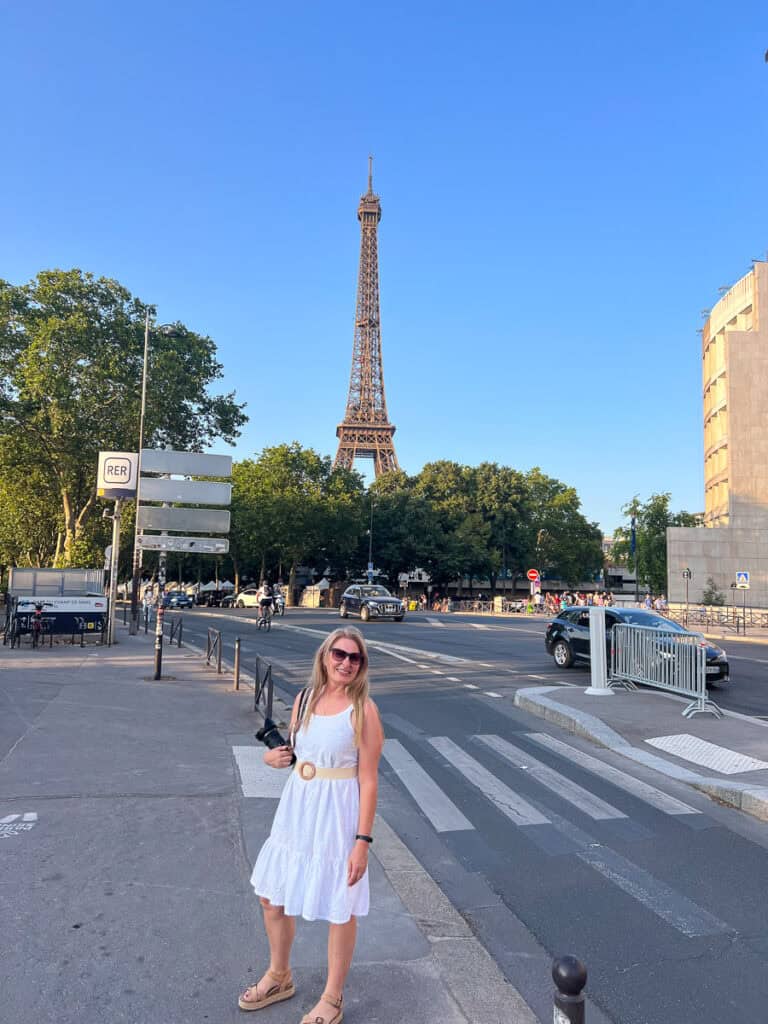
If you still have some energy left, head toward the Eiffel Tower for the evening. After a day spent exploring historic Paris, seeing this famous landmark in person is a pretty special way to finish.
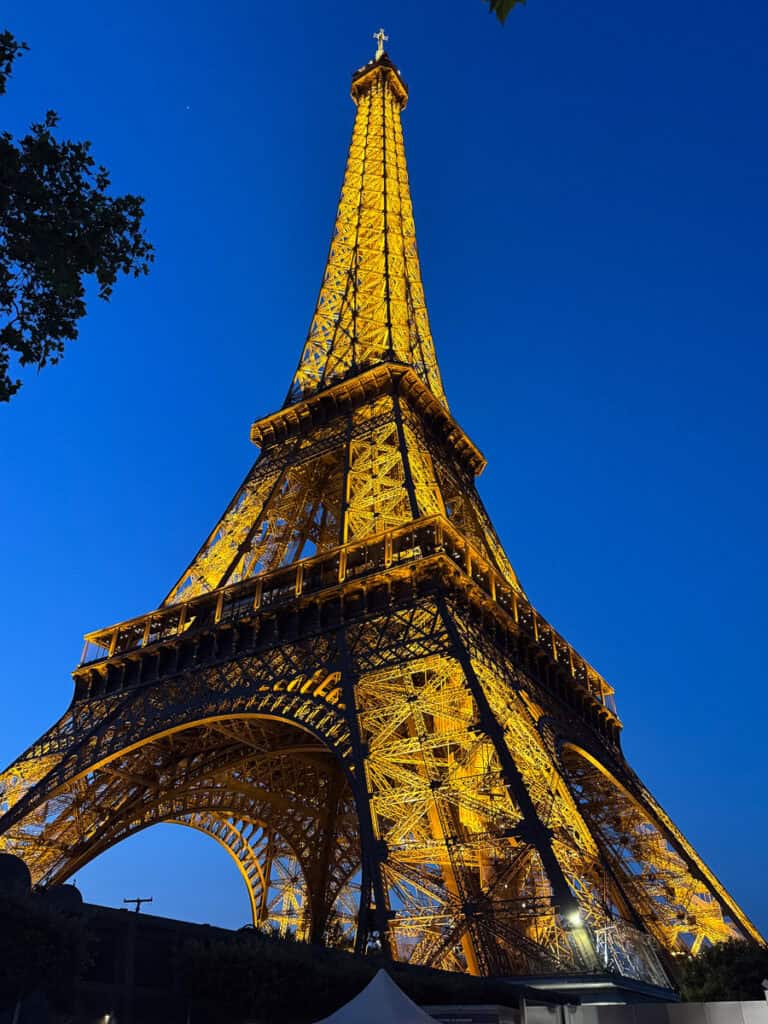
I was so excited to arrive in the area and get my first proper glimpse of the tower! There are so many viewpoints around the neighborhood, and we spent about an hour wandering around and taking photos.
I’m a huge fan of the Eiffel Tower. It’s special to see in person, and I love how it appears from so many different parts of the city. I had a long list of photography spots I wanted to visit and didn’t get to even half of them.
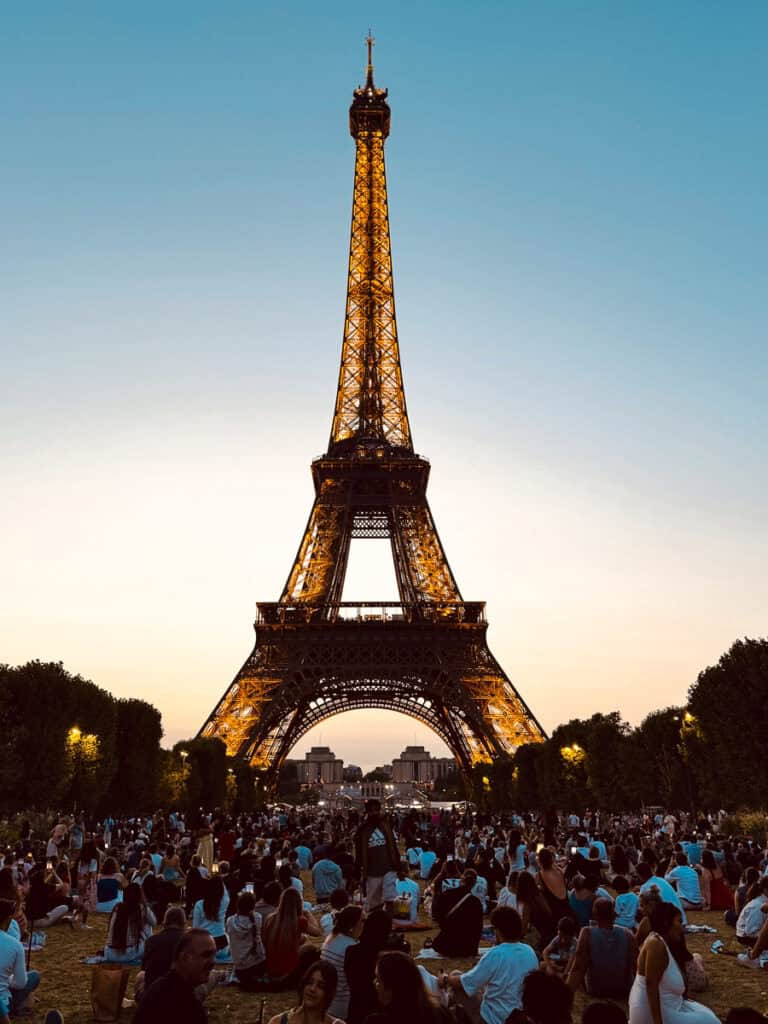
We eventually settled on the grassy area of Champ de Mars, right near the base of the tower, to watch the sparkle. It was absolutely packed!
Vendors were walking around selling blankets and drinks, including champagne, at the elevated prices you’d expect in such a popular tourist spot. If you’d like a drink or something to sit on, I recommend bringing your own.
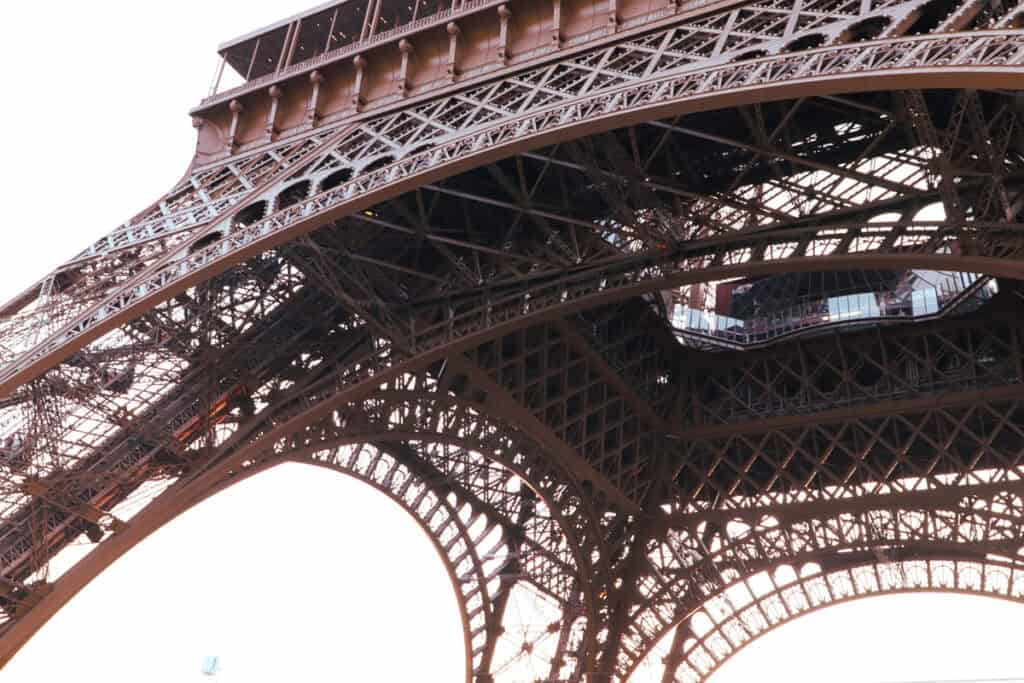
The Eiffel Tower’s sparkling display is a memorable sight. During our visit, we were surrounded by a huge crowd, and the atmosphere was electric. Listening to thousands of people gasp as the lights began to twinkle was such a fun experience.
It’s one thing to see photos of the Eiffel Tower at night, but being there in person is different.
Practical tip: Don’t rush to the metro the moment the sparkle ends. We noticed that many people headed straight for the trains, making them very crowded. If you can linger a little longer, you may avoid some of the immediate rush.
Check the official Eiffel Tower website for current lighting details before your visit.
A note about pacing: This is a substantial sightseeing day. Allow time to explore the cathedral, visit the historic attractions, enjoy lunch, and travel across the city. If you’re running behind or feeling tired, don’t be afraid to shorten a visit or skip a stop.
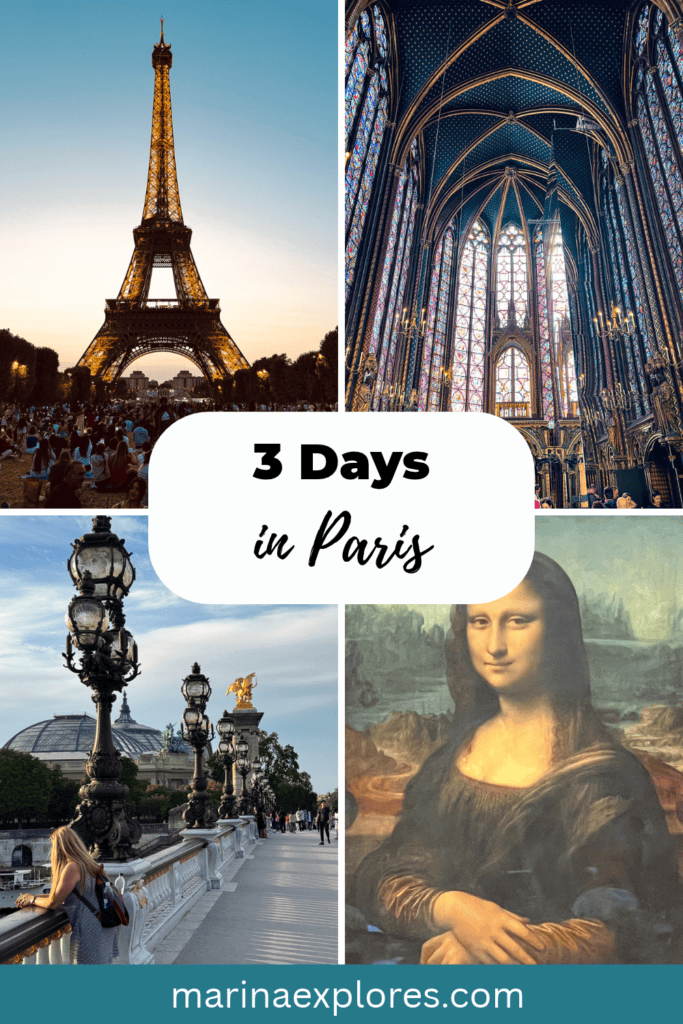
Save this 3-day Paris itinerary to Pinterest so you can refer back to it when planning your trip!
Day 3: The Louvre, Montmartre, and Paris Viewpoints
The Louvre and its surrounding area can easily fill most of a day, even if you don’t try to see everything. Add a few of Paris’s famous viewpoints, and you’ll have another full day of sightseeing!
This was the day I tried to fit in everything still on my list. Looking back, I probably should have cut a stop or two, but I was determined to make the most of our time in Paris.
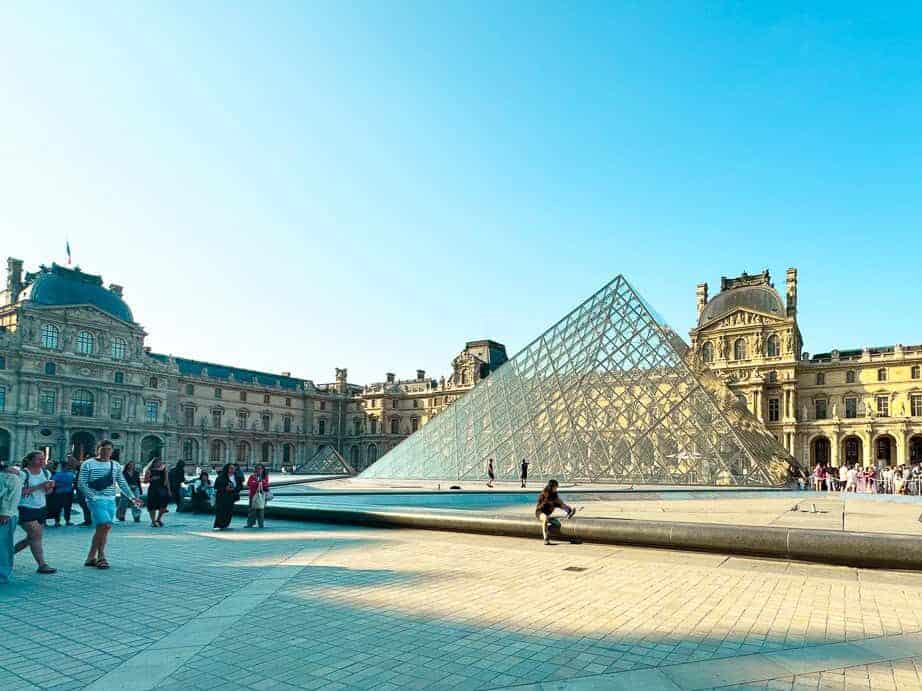
Visit the Louvre Museum in the Morning
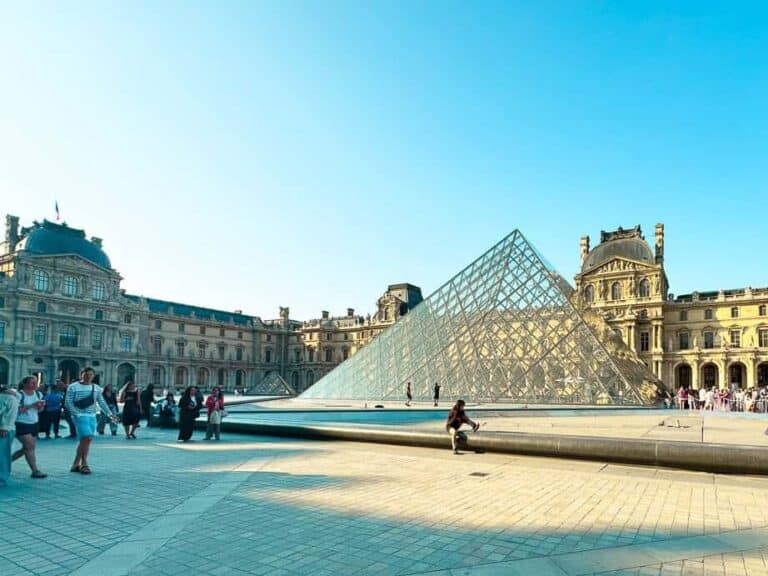
We had 9 a.m. tickets for the Louvre. I’d read a tip about entering through the Carrousel du Louvre, the underground shopping mall directly beneath the pyramid, so we decided to try it.
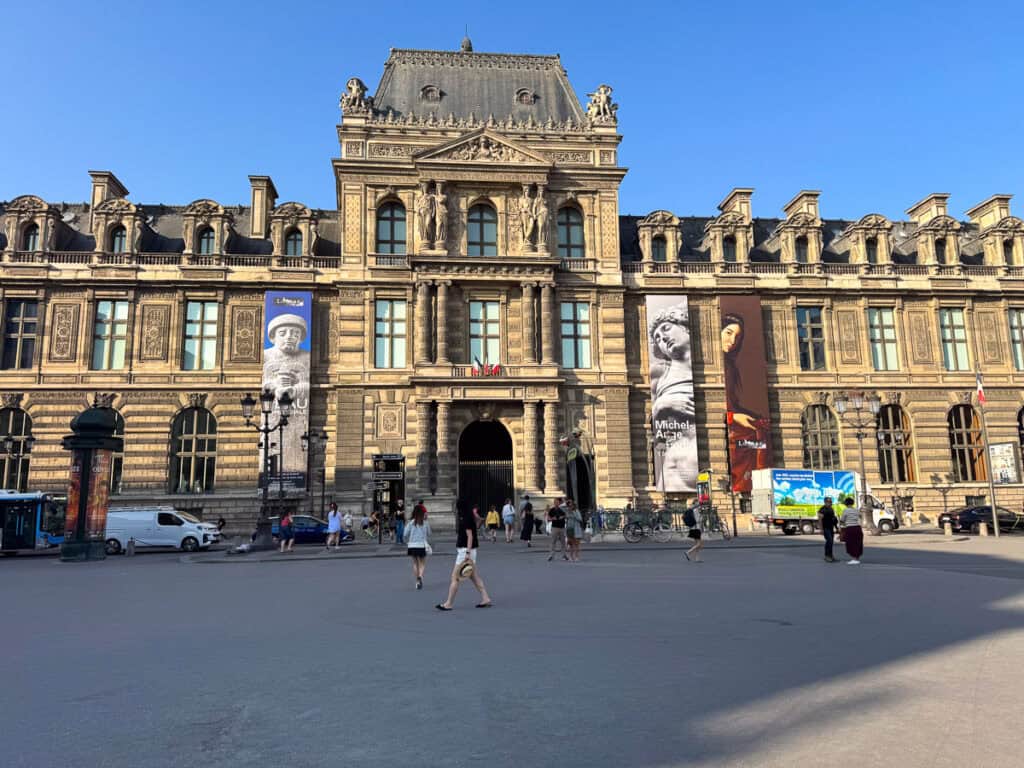
If you’re standing in front of the Louvre, the entrance to the Carrousel is to the right, along Rue de Rivoli. Head downstairs to find the underground entrance. It’s worth checking the Louvre’s official entrance information before your visit, as entrance access and queues can vary.
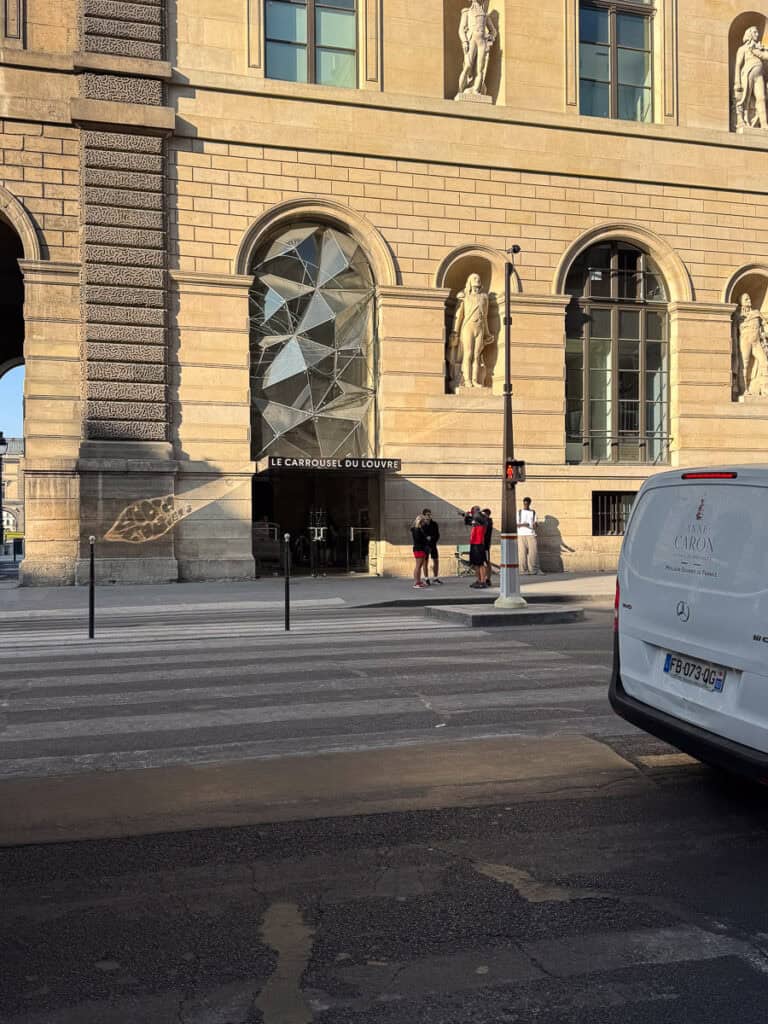
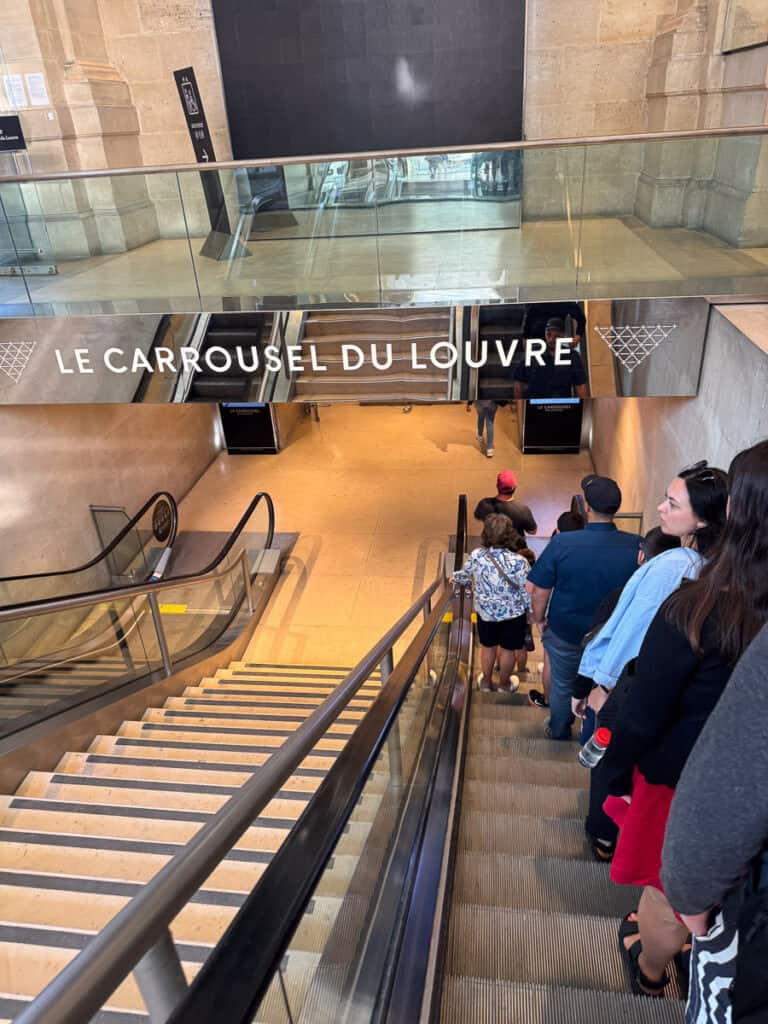

The Carrousel entrance isn’t necessarily line-free, but it gave us an alternative to waiting outside in the courtyard under the sun.

Once inside, take a moment to appreciate the architecture. The Louvre was originally a medieval fortress before becoming a royal palace, which helps explain its grand scale. Today, the sprawling complex houses one of the world’s largest art collections.
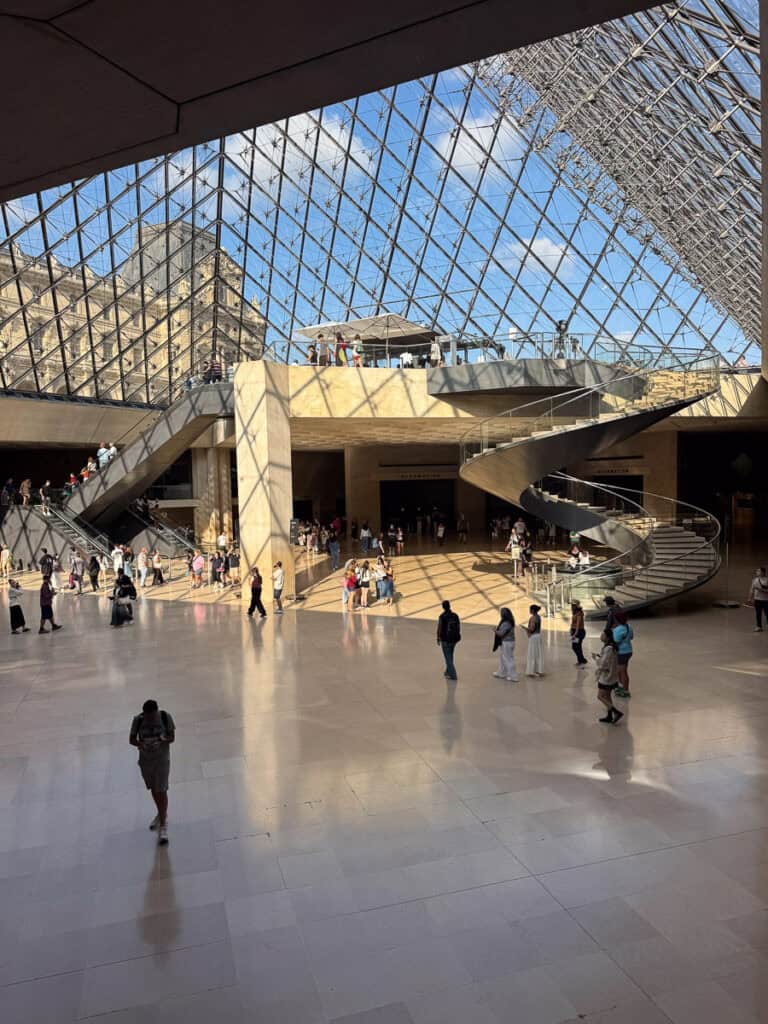
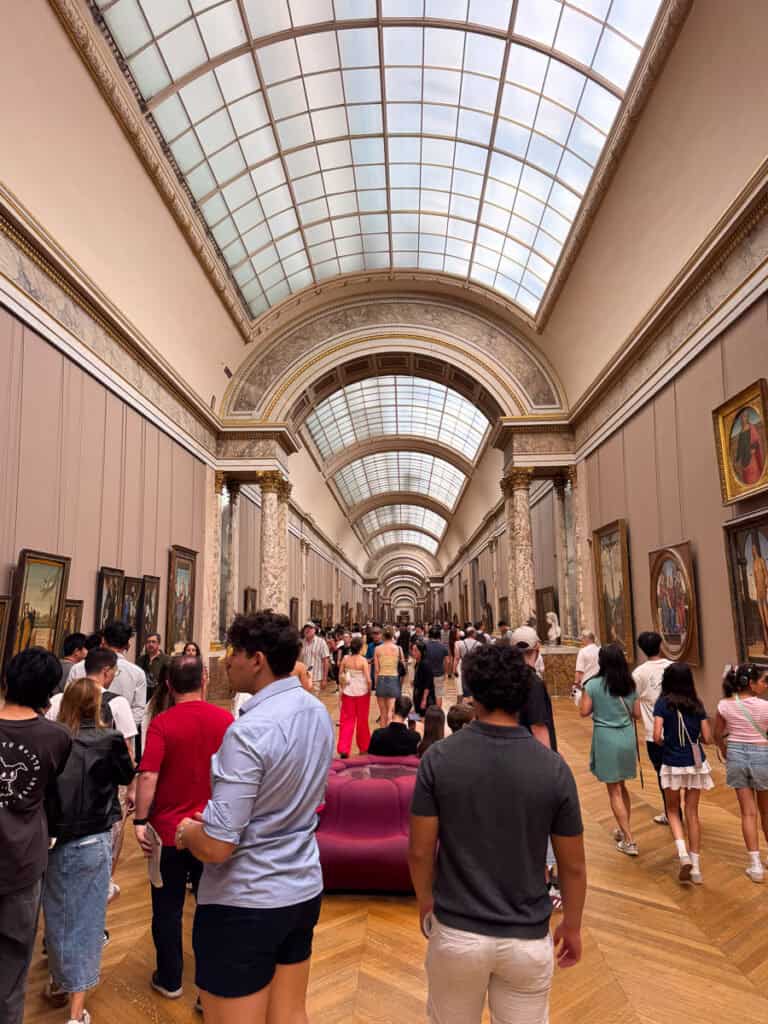
Of course, we had to see the Mona Lisa. I’d seen countless photos of this painting, but nothing quite prepared me for the crowd gathered around it.

Picture me and hundreds of my closest friends, all squeezed together to catch a glimpse of this famous lady!
The process was surprisingly organized, considering the crowd. Everyone shuffled forward a few at a time, snapped photos, and moved along as museum staff opened the ropes to keep things flowing.

It’s definitely a memorable experience, although the painting itself is much smaller than you might expect from its reputation.
We used a Rick Steves Europe audio tour to help guide our visit. Unfortunately, some of the exhibits mentioned in the tour, including works we wanted to see, were being renovated or were out on loan. That was a bit of a bummer, but it’s a good reminder that museum displays change.

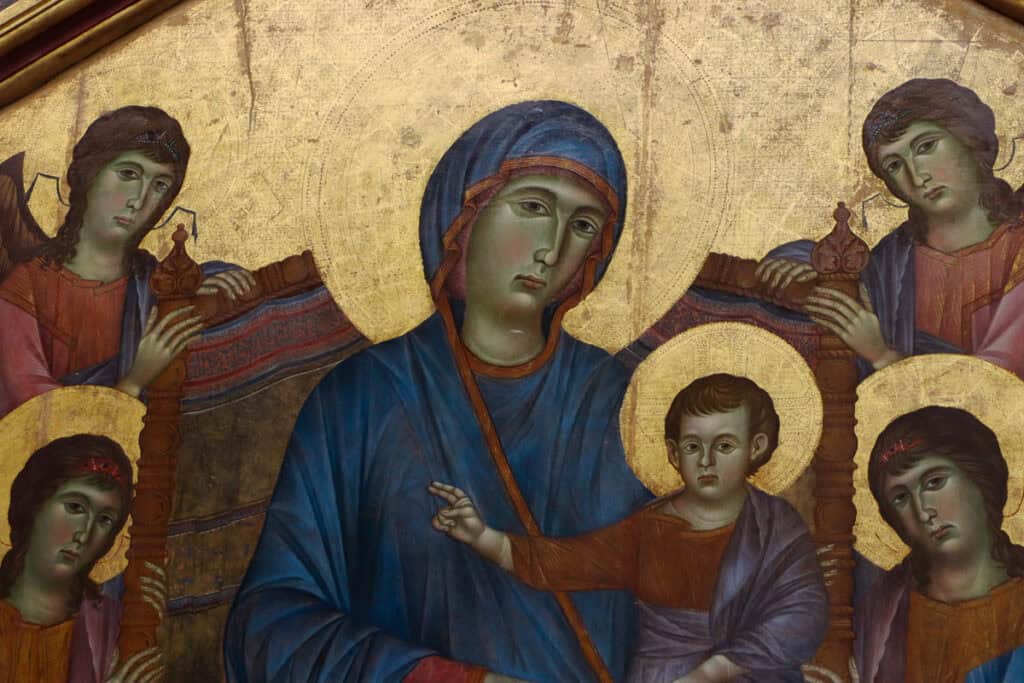
The Louvre has an incredible amount of art, from ancient civilizations to European masterpieces, and we only scratched the surface. You could spend days here and still not see everything.
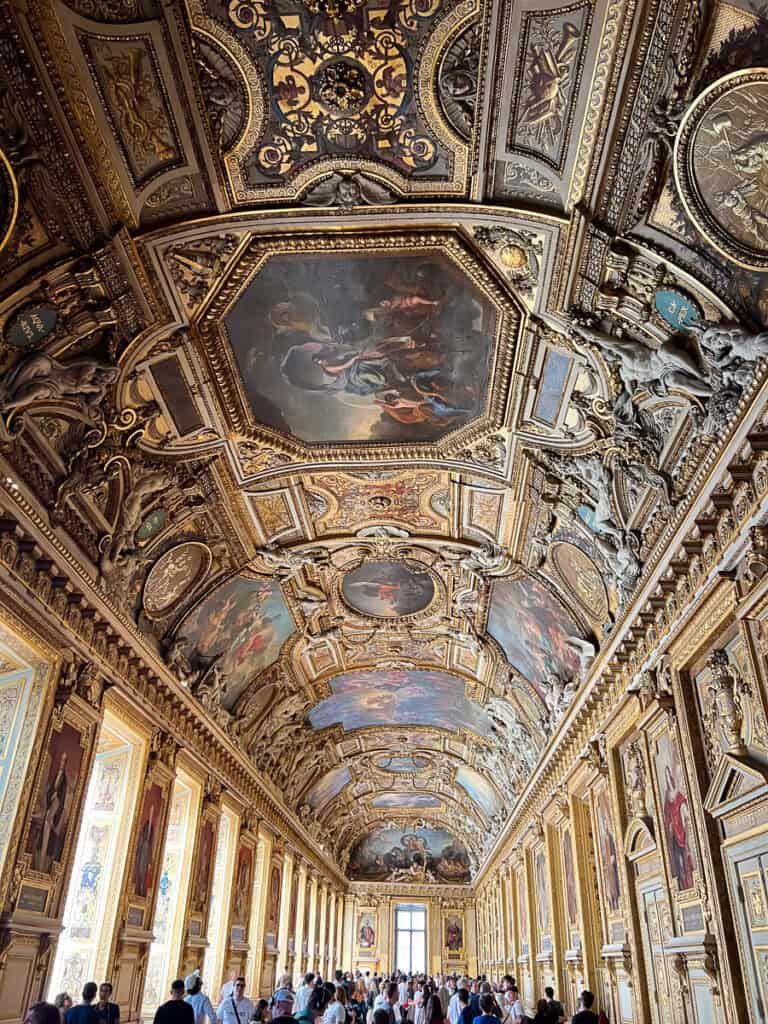
Practical tip: Choose a few must-see works before you arrive. Even several hours at the Louvre isn’t enough to cover everything, and having a short priority list will help you enjoy the visit without feeling like you’re racing through the galleries.
Take a Walk Through the Tuileries Garden
After the Louvre, we wandered through the Tuileries Garden, and it was such a pretty change of pace.
This historic garden stretches between the Louvre and Place de la Concorde, with tree-lined paths, fountains, sculptures, and plenty of places to sit. We also stumbled across the Olympic cauldron during our visit, which was a fun surprise.

The cauldron from the 2024 Olympics was on display during our summer visit, but availability and viewing arrangements can vary, so check current details if you’d like to see it.
The garden offers lovely views back toward the Louvre and gives you a chance to slow down after spending hours indoors.

I also wish I’d known about the cafés in the garden before we arrived. I would have happily planned to stop for lunch here after the museum. It’s a lovely area to take a break before continuing your sightseeing.
If you’re planning to visit the Louvre, I’ve put together a guide with practical tips for entering the museum, seeing the Mona Lisa, and exploring the Tuileries Garden afterward.
See the Arc de Triomphe and the Champs-Élysées
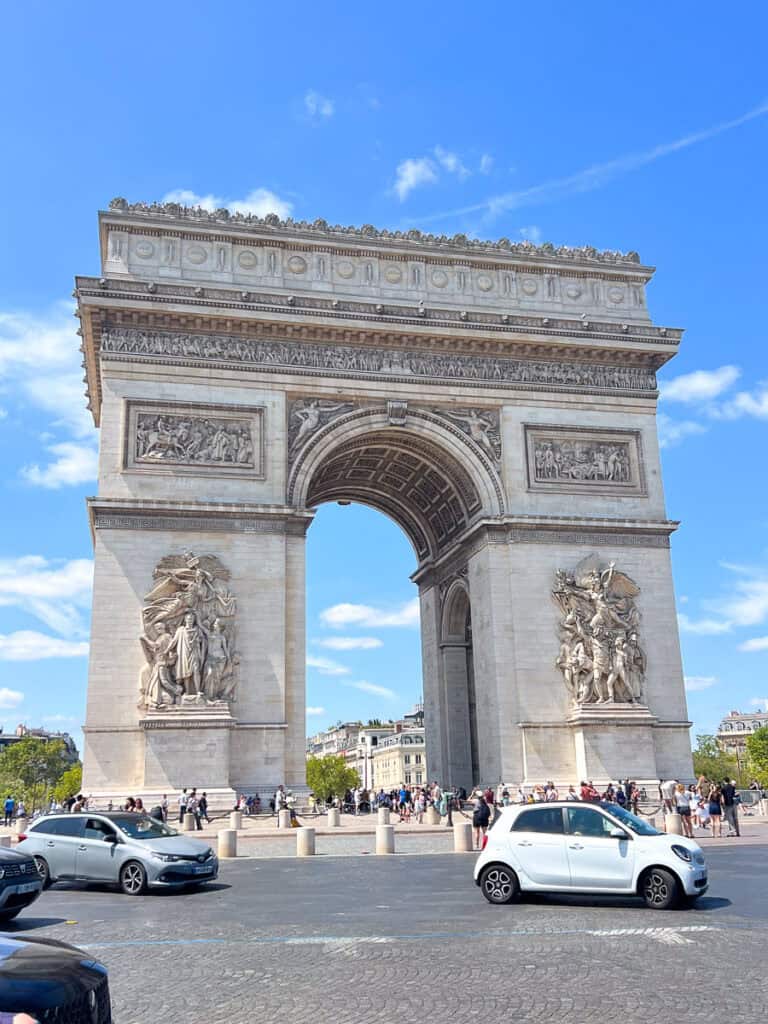
We checked Google Maps and decided it didn’t look too far to walk to the Arc de Triomphe. Looking back, it was pretty far!
Our route took us along the Champs-Élysées, the famous boulevard lined with shops, cafés, and restaurants. There were plenty of high-end stores, but I’m not much of a shopper, so we treated it as interesting scenery along the way.
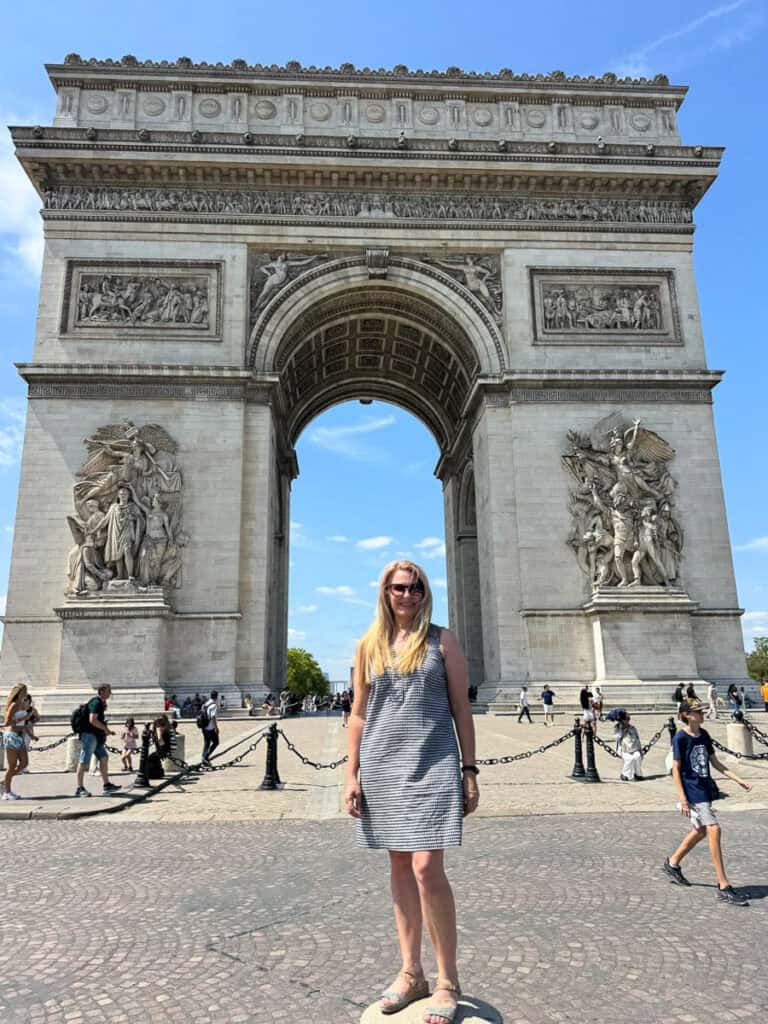
When we finally arrived at the Arc de Triomphe, I was struck by how enormous it is. The intricate carvings are impressive up close, and its location in the middle of a giant traffic roundabout makes it even more dramatic.
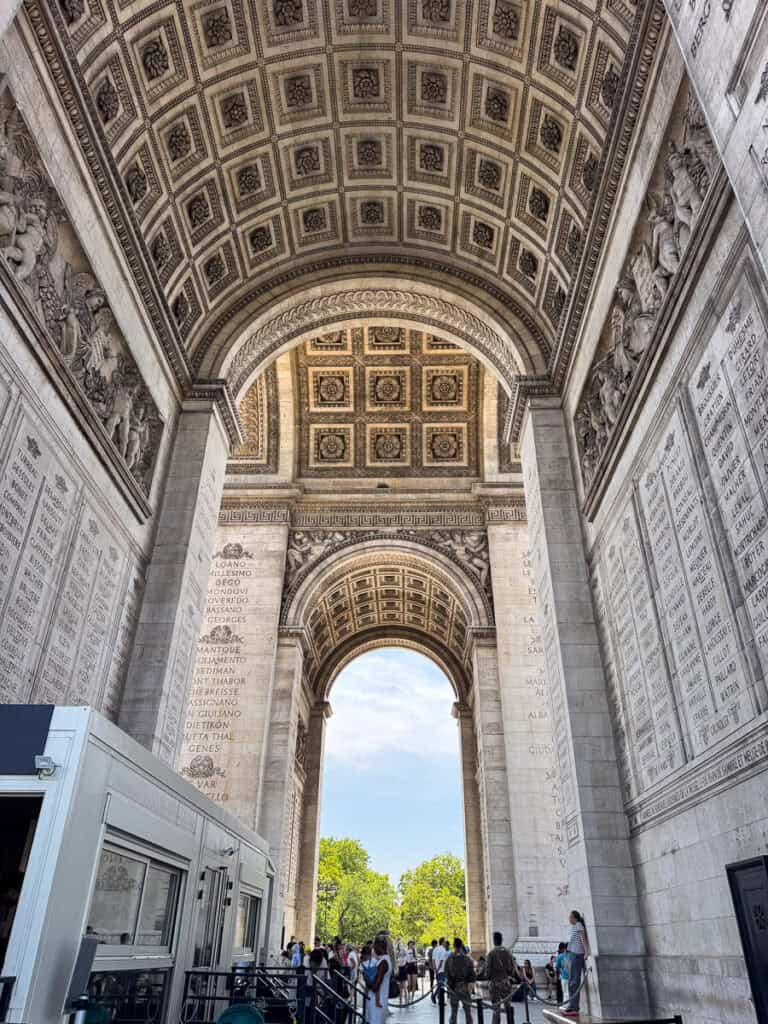
We took photos from a distance, then played a game of Frogger to get across the road. Only after reaching the other side did I remember that there’s an underground pedestrian passage. Oops!
Please learn from my mistake and use the tunnel instead. It’s the much safer way to reach the monument.
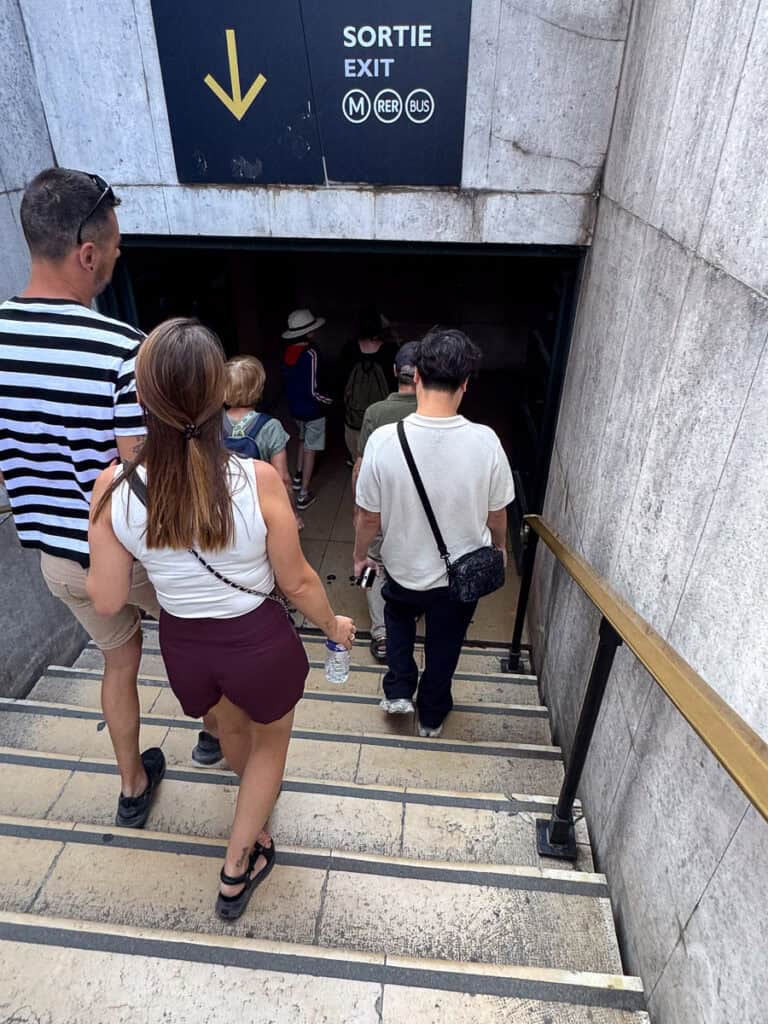

You can also climb to the top of the Arc de Triomphe for panoramic views over Paris, including the avenues radiating out from the roundabout. We didn’t do the climb, but it’s worth considering if you want another elevated view of the city.
Practical tip: Don’t underestimate the distance from the Tuileries to the Arc de Triomphe. If you’re already tired from the Louvre, consider taking the metro rather than adding a long walk to your day.
Explore Montmartre and Sacré-Cœur
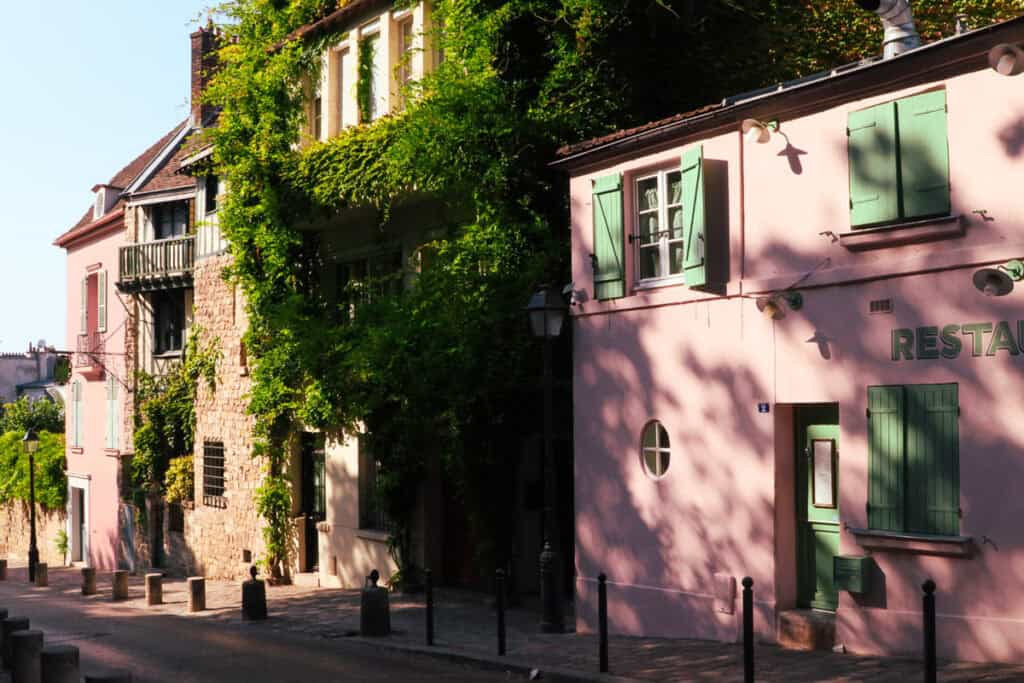
Montmartre was one of the neighborhoods I was most excited to explore. It’s artsy, full of character, and quite different from the grand boulevards and monuments in central Paris.
It’s also very hilly, with plenty of stairs!


We wandered through Place du Tertre, the famous artists’ square, where portrait artists lined the streets. It’s a neat area to explore, but it was pretty crowded when we visited. Since we weren’t interested in having our portraits drawn, we kept moving.
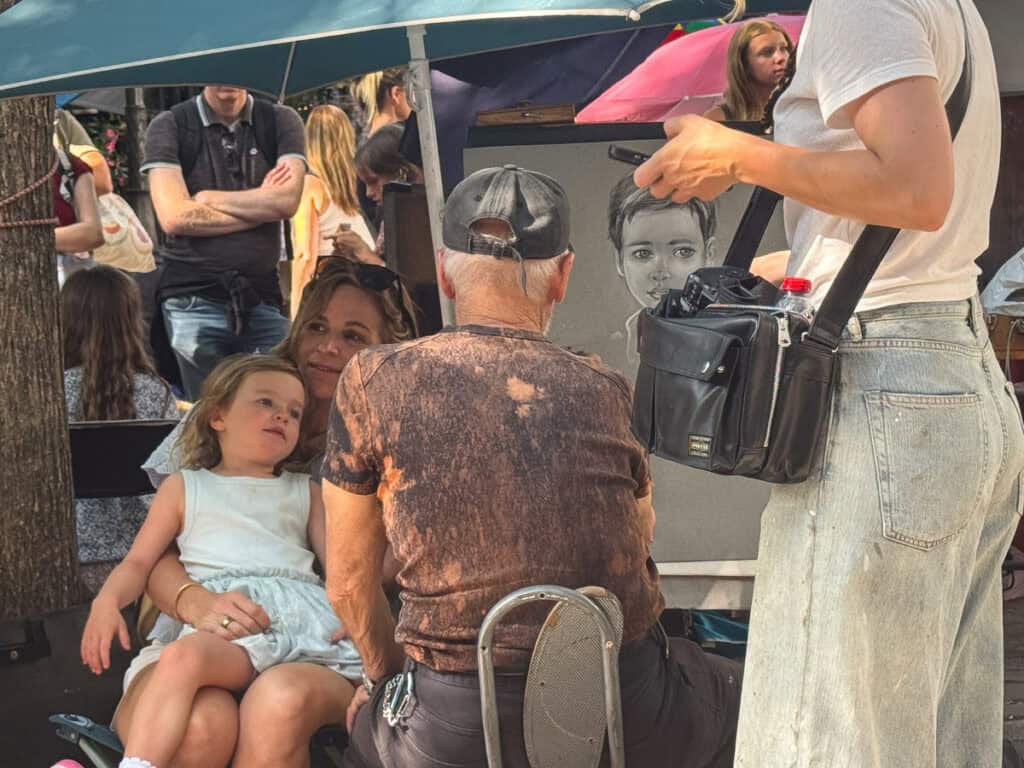
Montmartre is also an area where it’s sensible to keep an eye on your belongings in busy crowds as pickpockets sometimes target distracted vistors.
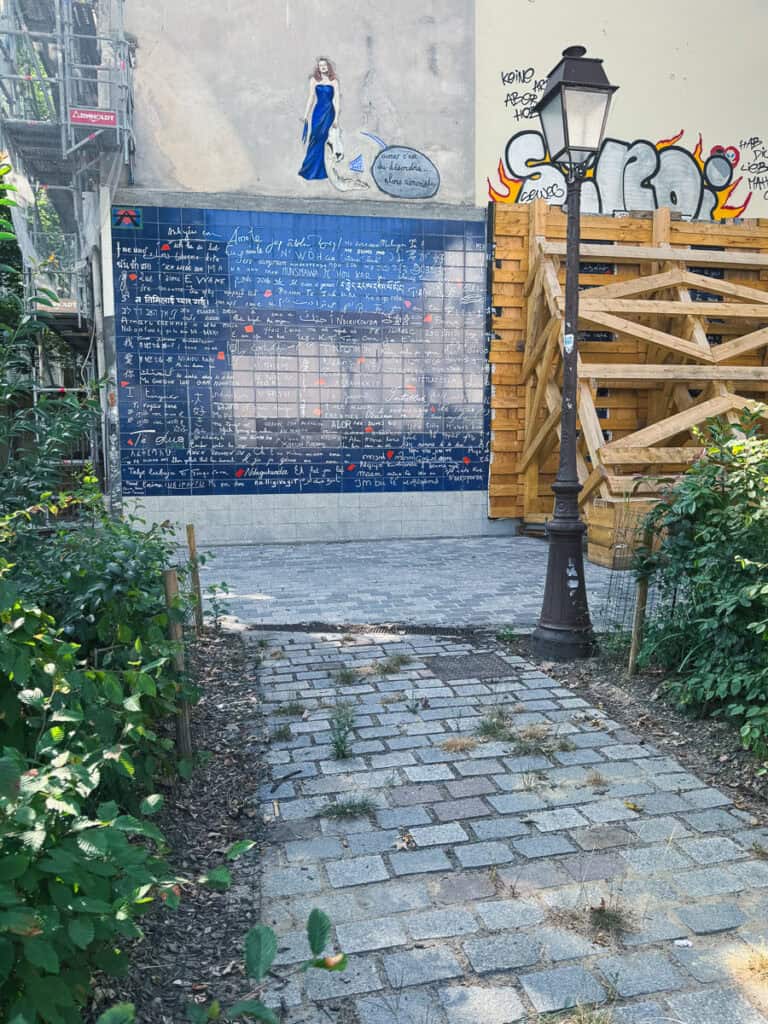
Nearby, you’ll find the Mur des Je t’aime (Wall of Love) featuring the words “I love you” in hundreds of languages. I was disappointed to arrive and find part of this artwork hidden behind scaffolding while graffiti removal was underway. Boo! We only got to see part of it.
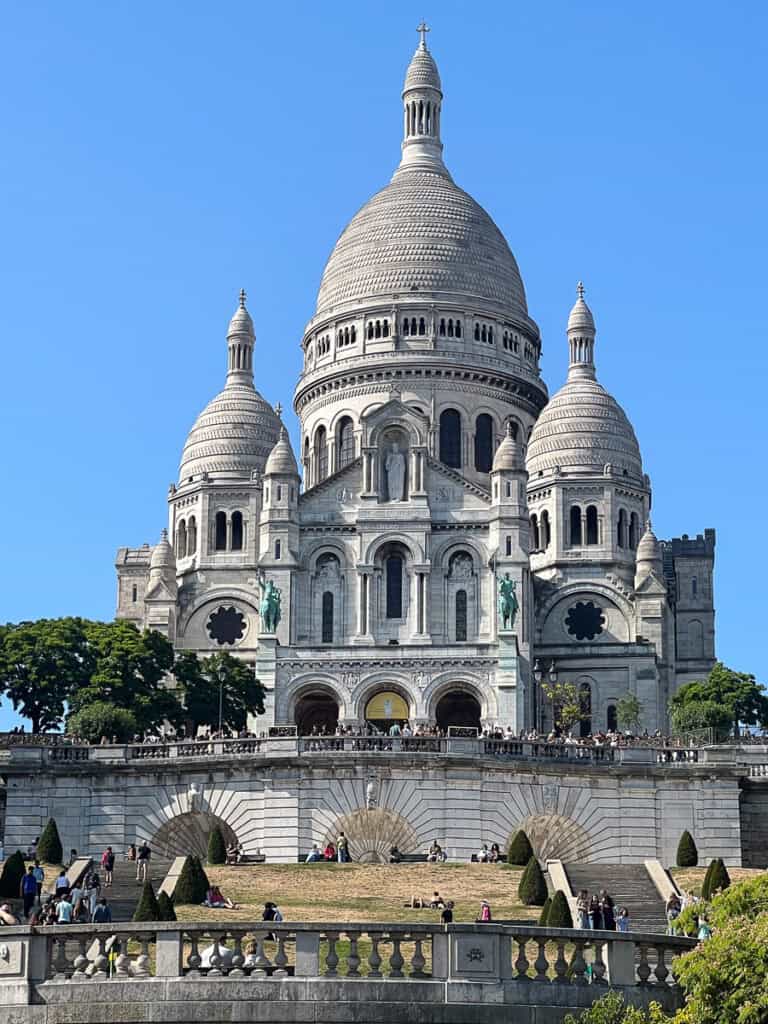
We continued to Sacré-Cœur, the beautiful white basilica perched above the city. It’s definitely worth visiting for both the architecture and the panoramic views.
We visited in the afternoon, when sunlight streamed through the stained glass. We also had the privilege of hearing a group of nuns singing as they passed through the basilica. It was an unexpectedly lovely moment.
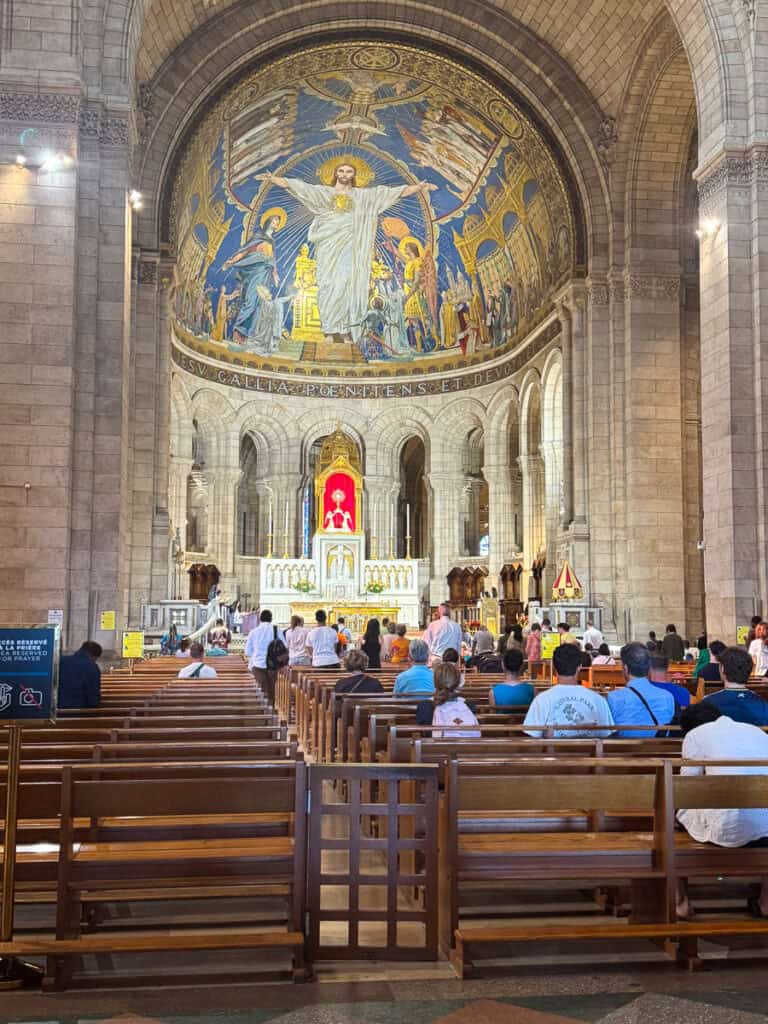
Outside, the steps offer another great view across Paris. They were filled with young people hanging out, drinking beer, and singing the Backstreet Boys’ “I Want It That Way.” It was pretty cute!
You can catch a glimpse of the Eiffel Tower from here too.
I’d originally planned to watch the sunset from Sacré-Cœur, but during our summer visit, sunset wasn’t until around 9:45 p.m. Rather than wait that long, we headed back to the Eiffel Tower to enjoy the evening.
Return to Trocadéro for Eiffel Tower Photos
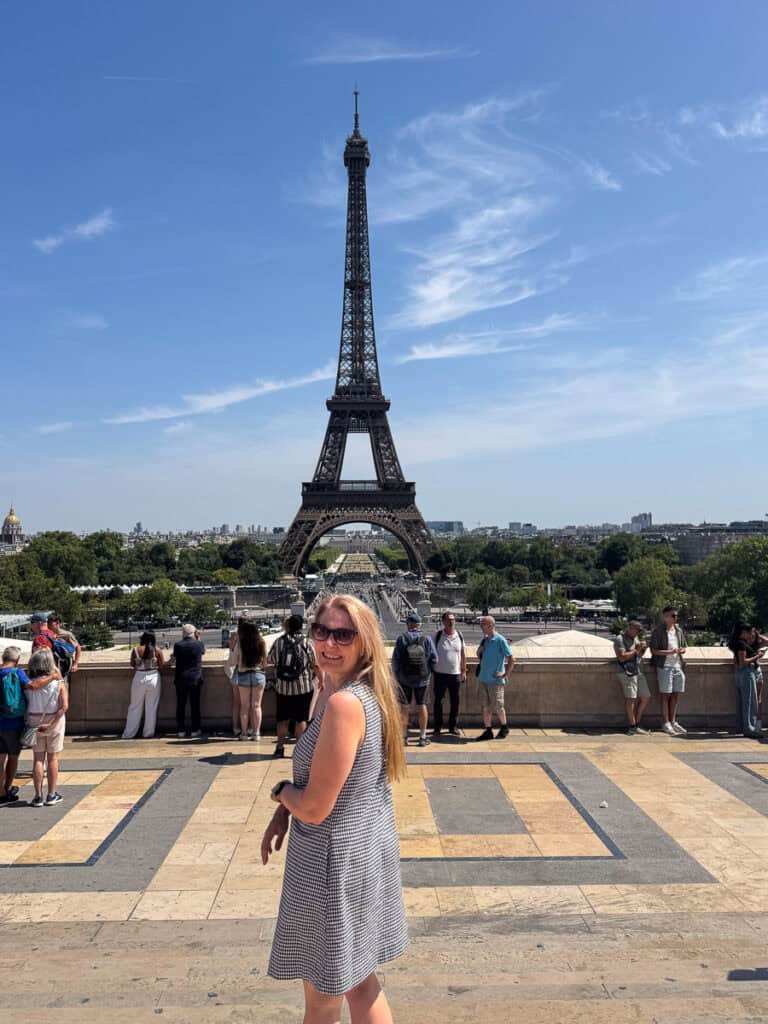
Can you ever take too many Eiffel Tower photos? Apparently not!
Trocadéro is another popular viewpoint, with a beautiful perspective of the tower from across the Seine. We stopped here to take more photos, and I spotted several professional photo shoots happening around the area. It’s easy to see why photographers love this location.
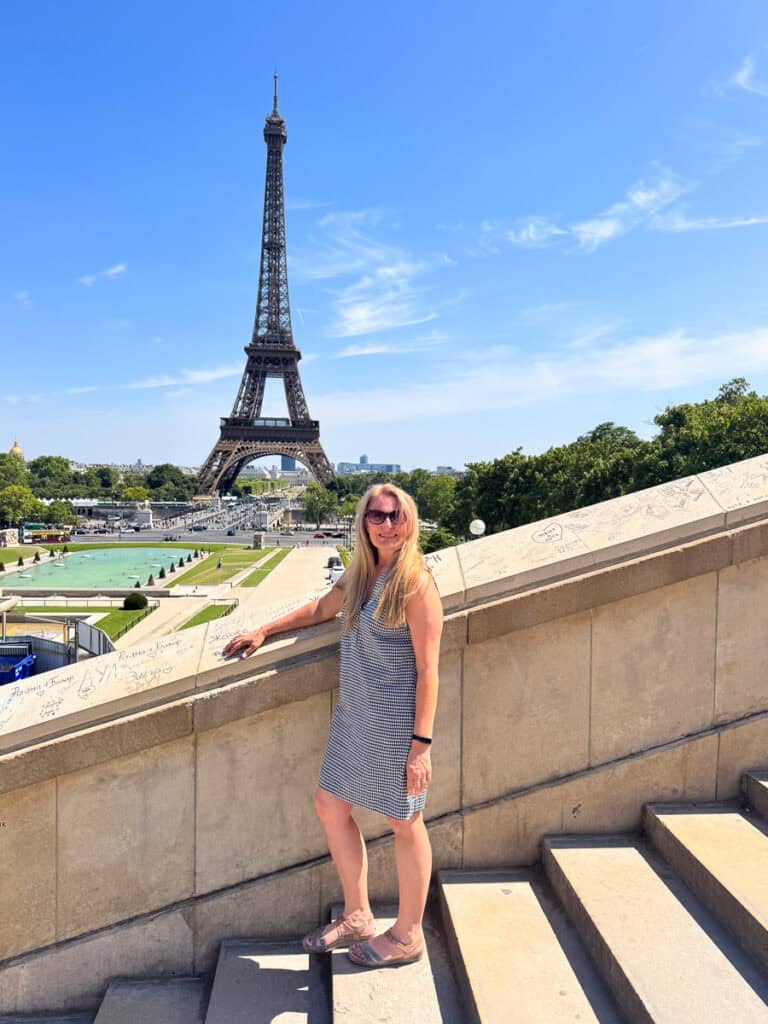
Best of all, enjoying the view from the public areas is free.
If you’re looking for a classic Eiffel Tower photo without paying for an observation deck, Trocadéro is well worth adding to your list. Just be prepared to share the view with plenty of other visitors.
Finish With a Walk Along the Seine (Optional)
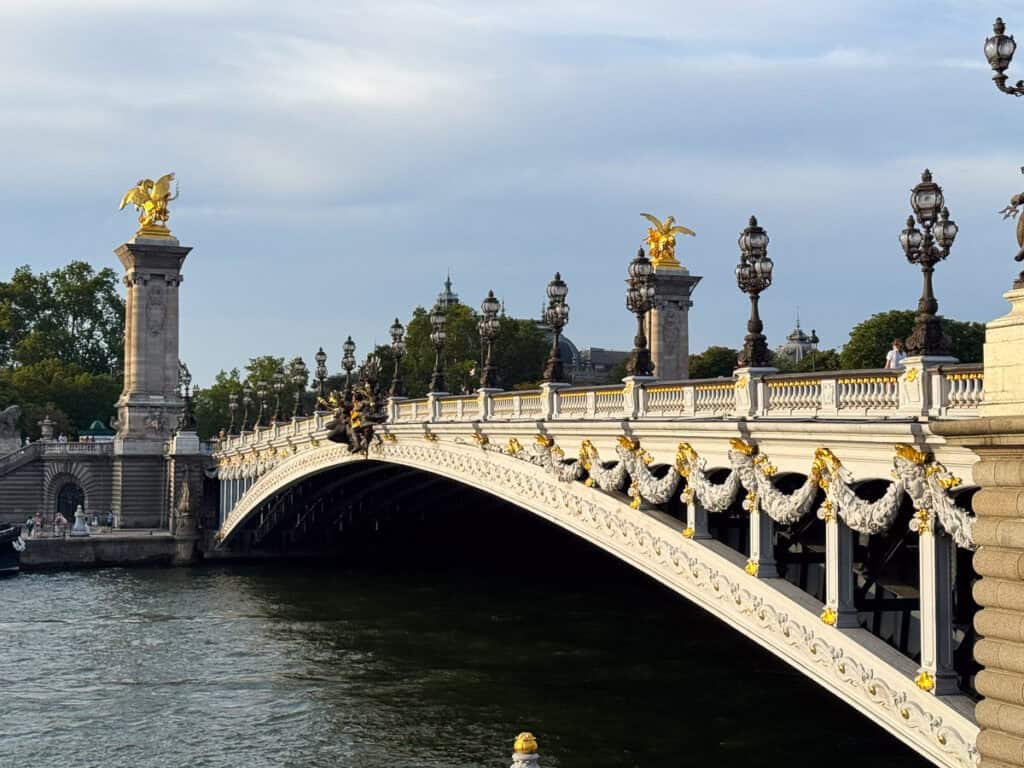
If you still have time and energy, consider finishing your day with a stroll along the Seine.
Pont Alexandre III is an especially beautiful photo stop, known for its ornate gold statues, decorative black Art Nouveau lamps, and elaborate details. The bridge is a lovely place to photograph Parisian architecture, with the river and surrounding landmarks providing a picturesque backdrop.
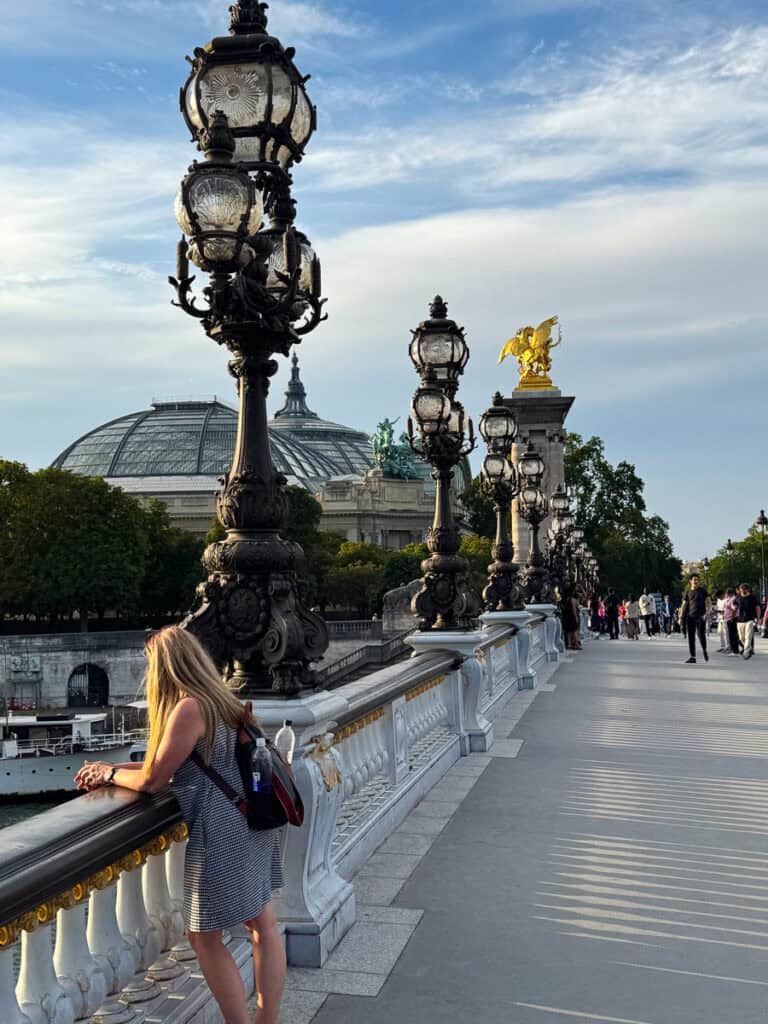
You don’t need to plan a long walk or another major attraction here. Sometimes, simply wandering along the river and taking in the scenery is a lovely way to end a busy day in Paris.
How I’d Make Day 3 More Manageable
This isn’t the most efficient way to see all the Paris landmarks, but I was determined to see as many of my favorites as possible before our three days in Paris were over.
If you’re looking for a more manageable pace, I’d remove Montmartre from this day or move it to a different day if your schedule allows. It’s a bit geographically separated from the other sights, and the hills and stairs add to the effort.
You could also choose between the evening sparkle at the Eiffel Tower on Day 2 and the extra photography stops on Day 3. We did both because I wanted to experience the tower at night and photograph it in daylight, but you don’t have to do the same.
My biggest takeaway? Pick the experiences that matter most to you rather than treating this itinerary as a checklist.
Practical Tips for Visiting Paris for the First Time
A little preparation can make a big difference when you’re visiting Paris for the first time. Here are a few things I learned during our trip.
Book Popular Paris Attractions in Advance
Some of Paris’s most popular attractions require a little advance planning, especially if you want to visit at a specific time.
- Notre-Dame Cathedral: Check the official website for current visitor information and free timed-entry reservations.
- Sainte-Chapelle and the Conciergerie: Book ahead if these are on your must-see list. We waited too long to reserve Sainte-Chapelle and ended up buying tickets through a third-party booking site after our preferred time was sold out.
- The Louvre: Reserve your entry and decide how you want to explore the museum before you arrive.
For the Louvre, you can use the Rick Steves Europe audio guide, rent an audio guide from the museum, or book a guided tour. With so much to see, having a plan can make the experience less overwhelming.
Before booking, think about how you prefer to explore. Do you like wandering independently, following an audio guide, or learning from a live guide? Would you prefer a group tour or a private one? Are skip-the-line options worth considering for your plans?
There’s no single best way to visit a major attraction. Knowing your preferences ahead of time can help you choose the option that makes the most sense for you.
Allow Extra Time for Paris Public Transportation
I’m a California girl, so public transportation isn’t something I grew up using regularly. I needed a little extra time to figure out the Paris Metro system, which initially felt like a rabbit’s warren to me!
Once I got more familiar with it, though, I found it fairly easy to navigate. There are signs throughout the stations, but you still need time to find the right platform, figure out which direction you’re going, walk between connections, and transfer trains. Some stations are large and crowded, which can make the process feel more complicated.
It’s also worth understanding your ticket or pass before boarding. Check the current fares, pass rules, and ticketing options before your trip, since these can change.
My advice? Don’t plan your connections as if you’ll be able to step off one train and immediately board the next. Give yourself some breathing room, especially when you’re carrying luggage or trying to make a timed-entry reservation.
Be Prepared for Crowds on the Metro
Paris Metro trains can get very crowded, particularly around major attractions and at busy times of day. On some trains, seats near the doors fold up to make more room for standing passengers. When the train is crowded, those seats may need to be folded up to make space for more people.
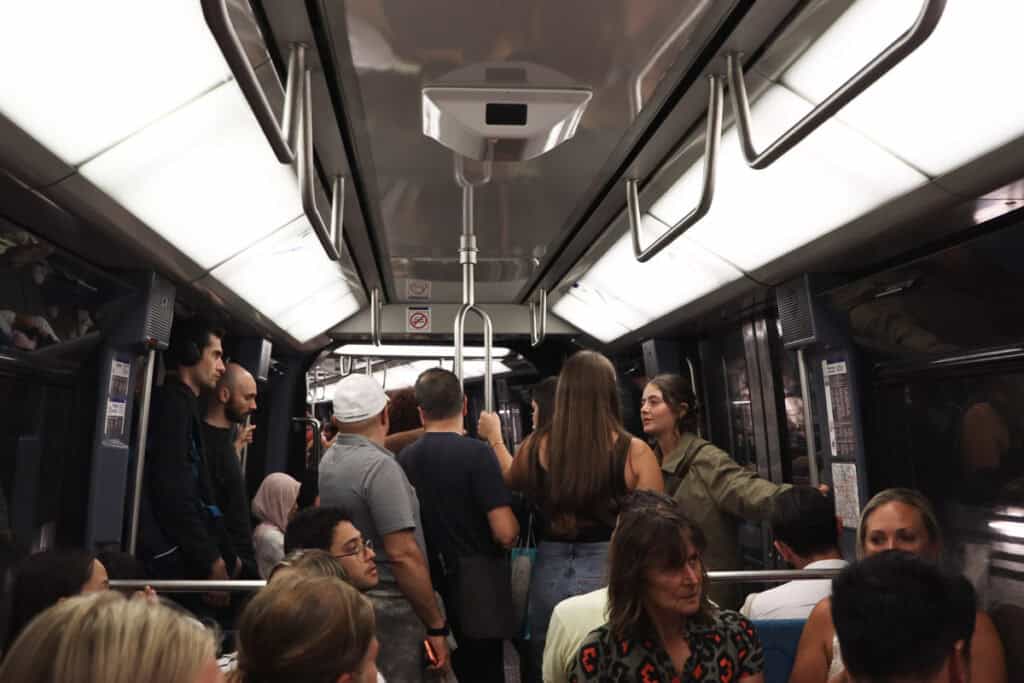
Crowds aren’t automatically a reason to worry, but it’s sensible to stay aware of your surroundings. In tightly packed areas, wear your purse or backpack in front when possible, keep zippers closed, and be cautious if strangers try to distract you.
We had one unsettling experience on an extremely crowded Metro train after leaving the Eiffel Tower. A few young people began talking very loudly and enthusiastically to my husband. It seemed friendly, but we became separated in the crowd. At the same time, I felt someone prodding my backpack, so I put my hand over it.
I use an anti-theft backpack with the main zipper against my back, but when we got off the train, I discovered that it was partway unzipped.
It really rattled me. We were uncomfortable enough that we took an Uber to our next hotel rather than risk another crowded Metro ride, especially since we’d have all our luggage with us.
In three weeks of using public transportation around Europe, this was the only time I felt unsafe. I wouldn’t let one experience put you off using the Metro, but I would take it as a reminder to keep your belongings secure and trust your instincts if a situation feels wrong.
Make Time for Paris’s Parks and Green Spaces
One thing I loved about Paris was the number of parks, gardens, and public benches scattered throughout the city. Even with a packed sightseeing schedule, it’s worth taking a break to sit in the shade, watch the people around you, and give your feet a rest.
We enjoyed the Tuileries Garden, with its paths, green spaces, and views of the Louvre. Place des Vosges was another lovely spot to pause, with shady trees and plenty of places to sit. And anywhere along the Seine offers a chance to slow down and enjoy the scenery.
These breaks might not feel like major sightseeing stops, but they can make a busy day more enjoyable. Sometimes a little time sitting in a Parisian park is just as welcome as another landmark.
Don’t Try to See Everything
If it’s your first visit to Paris, it’s tempting to squeeze in every famous landmark, museum, and neighborhood. I certainly understand the temptation!
Three days is enough to experience a lot, especially if you’re comfortable walking plenty and planning full days. But it isn’t enough time to see everything Paris has to offer.
Our itinerary covers many of the big highlights, but it also involves a lot of walking and very little downtime. If that sounds like too much, choose the places that matter most to you and give yourself permission to skip the rest. You can always save a few things for your next visit.
I’d rather that you leave Paris with a few places still on your list than turn the whole trip into a race to check off attractions.
Where to Stay in Paris for 3 Days
For a three-day visit, I’d look for a hotel with convenient Metro access so you can spend less time getting around and more time exploring.
We chose Paris’s 10th arrondissement, near the edge of the 2nd, which put us a little outside some of the pricier tourist areas while keeping many sights within a reasonable Metro ride.
Why We Chose the République Area
I wanted a convenient home base for sightseeing without paying a premium just to be in the middle of a major tourist area. District République worked well for us, with a comfortable bed, good air conditioning, breakfast included, and luggage storage after checkout.
The nearest Metro station was about a two-block walk away, which made getting around easy.
We arrived from Orly Airport and departed from Charles de Gaulle, so we knew we’d be navigating public transportation with our luggage at both ends of the trip. We prefer to do things independently, and staying near a Metro station suited our travel style.
If you’d rather avoid managing luggage on public transportation, you could also look into a private airport transfer. It costs extra, of course, but might be worth it after an overnight flight or if you’re traveling with several bags.
Ultimately, I’d choose your hotel location based on your budget, sightseeing plans, and how comfortable you are using public transportation.
Final Thoughts: Planning 3 Days in Paris
Three days in Paris gave us time to see many of the city’s famous sights, from Notre-Dame and the Louvre to Montmartre and the Eiffel Tower. I especially loved photographing the Eiffel Tower from different viewpoints, and the Conciergerie turned out to be a surprise favorite.
Still, we barely scratched the surface. I could easily have spent more time exploring the Louvre and the historic center, and we didn’t make it to every viewpoint or attraction on our list.
If you have more than three days, I’d resist the temptation to fill every extra hour with another landmark. Leave some time to wander, linger at a café, or explore a neighborhood without a strict plan.
I could have spent twice as long in Paris, easily. It’s such a major European hub that I hope to return again and again. There’s so much more I’d love to discover in this beautiful city!
Planning Your Trip? Read Next: ✈️
- Visiting the Louvre? – A practical guide for visiting the Louvre and Tuileries Garden
- 3 Days in Rome: Itinerary – Ancient ruins, the Vatican, and sunset walks
- 3 Days in Amsterdam Before A Cruise – Van Gogh, Zaanse Schans, and canals
- Rhine River Cruise Itinerary – Our day-by-day journey from Amsterdam to Basel
- 5 Days in Switzerland Itinerary – Lucerne, Pilatus, Stoos, and Lauterbrunnen