17 Days in Italy: A Realistic First-Time Itinerary for Rome, Florence, Cinque Terre, & Venice
Italy was our first trip to Europe, and I spent over a year planning our 17-day Italy itinerary. I carefully budgeted for flights and accommodations so we could splurge where it mattered most: on the experiences that would make the trip memorable.
As two midlife teachers traveling in peak summer, we dealt with long travel days, intense heat, and crowded piazzas. But we still wanted to see the Italy we had imagined—iconic landmarks, quiet side streets, long meals of pasta and gelato, gondola rides, and plenty of opportunities to take photos along the way.
This 17-day Italy itinerary takes you through Rome, Florence, Cinque Terre, and Venice, with travel days built in between destinations. It isn’t 17 days of nonstop sightseeing, and that’s intentional. We wanted enough time in each place to enjoy the experience without constantly feeling like we were rushing to the next train.
Is 17 Days Enough for a First Trip to Italy?
Yes, 17 days can be enough for a first trip to Italy if you focus on a few destinations rather than trying to see the entire country. This itinerary gives you time in Rome, Florence, Cinque Terre, and Venice, along with day trips to Tuscany, Murano, and Burano.
After spending 17 days traveling through Italy—and more than a year planning the trip—I’m sharing a realistic Italy itinerary for first-time visitors, including what worked, what didn’t, and what I would change if I planned the trip again.
This guide includes:
- A day-by-day Italy itinerary for Rome, Florence, Cinque Terre, and Venice
- Budget strategies, including where we saved and where we splurged
- Pacing advice for putting together a comfortable Italy travel route
As empty-nesters, we wanted a trip that gave us time to enjoy each city rather than rushing from landmark to landmark. This itinerary is best suited to moderately active travelers who enjoy walking, photography, major sights, and a mix of iconic attractions and local experiences.
17-Day Italy Itinerary at a Glance
Our 17 days included arrival and departure, train travel between cities, sightseeing, and several day trips. Some travel days also gave us time to explore, so the number of days in each destination isn’t simply a count of full sightseeing days.
| Day | Where | What We Did |
| 1 | Rome | Fly to Rome and settle in |
| 2 | Rome | Explore Centro Storico |
| 3 | Rome | Ancient Rome – Colosseum and Palatine Hill |
| 4 | Rome | Vatican City |
| 5 | Florence | High speed train to Florence, explore the city |
| 6 | Florence | Duomo and Accademia Gallery |
| 7 | Florence | Pasta-making class |
| 8 | Florence | Full-day Tuscany day trip |
| 9 | Florence | Half-day Vespa tour, explore Florence |
| 10 | Cinque Terre | Train to Cinque Terre, hike the first village |
| 11 | Cinque Terre | Hike the four remaining villages |
| 12 | Cinque Terre | Pesto experience |
| 13 | Venice | Train to Venice, explore |
| 14 | Venice | St. Mark’s Square, Basilica, ad Doge’s Palace |
| 15 | Venice | Grand Canal, gondola ride, and exploring |
| 16 | Venice | Day trip to Murano and Burano for glass-blowing class |
| 17 | — | Travel back to Rome and fly home |
At a Glance
Rome: 4 nights / 3 full sightseeing days
Florence: 6 nights / 4 full sightseeing days plus arrival day and day trips
Cinque Terre: 2 nights / hiked all five villages across two days, plus a pesto experience
Venice: 4 nights / 3 full sightseeing days plus arrival day
This route gave us a mix of ancient history, art and architecture, active adventures, food experiences, beautiful scenery, and iconic Italian cities without trying to squeeze too many destinations into one trip.
Table of Contents
📍Rome — 3 Days
📍Florence — 6 Days
📍Cinque Terre — 2 Days
📍Venice — 4 Days
📍Rome (3 Days)
Rome was our first stop in Italy, and three full days gave us enough time to see many of the city’s major sights without trying to cram everything into one trip.
Rome, often called the “Eternal City,” is a fascinating mix of ancient history, incredible art and architecture, lively piazzas, and everyday modern life. As a former history teacher, I was especially excited to finally see some of the places I’d spent years teaching about.
If you’re planning a shorter stay, I’ve broken down exactly how I’d structure your time in my 3-day Rome itinerary, including what I’d prioritize and how to make the most of your time.
Trevi Fountain, Spanish Steps & Pantheon

We spent our first day exploring Historic Rome on foot, visiting some of the city’s most recognizable landmarks, including the Trevi Fountain, Pantheon, and Spanish Steps.
The historic Centro Storico is one of the easiest parts of Rome to explore on foot. Rather than rushing from one attraction to another, we enjoyed wandering through the streets and piazzas and stopping along the way.
We returned to the Trevi Fountain several times, both during the day and at night. Its turquoise water, dramatic architecture, and lively atmosphere make it one of the most photogenic spots in Rome — but it also gets incredibly crowded.
Colosseum & Ancient Rome

This post may contain affiliate links, which means I may earn a small commission at no extra cost to you.
The Colosseum and Ancient Rome were highlights of our second day. As a former history teacher, I was especially excited to explore the Colosseum in person after teaching about ancient Rome for so many years.
We took a guided tour to give us some historical context, then returned that evening with a picnic and watched the light change around the ruins.
One of our most memorable evenings in Rome was walking through the city at sunset and ending near the Colosseum.
Wondering whether you need a tour? I break down whether a guided Colosseum tour is worth it, including what we liked about ours. We took this exact Colosseum tour.

Vatican City

The Vatican Museums and St. Peter’s Basilica filled our third day in Rome. The Vatican Museums are a treasure trove of art and architecture, and the Sistine Chapel is only one part of the experience.
We loved seeing the enormous collection of paintings, sculptures, and elaborate rooms throughout the museums, including the Gallery of Maps. St. Peter’s Basilica was another highlight, with its incredible scale and ornate details. Michelangelo’s Pietà was being worked on during our visit, so we weren’t able to see it.
We chose an early morning Vatican tour, which helped us get through the museums before the crowds became overwhelming. If you’re visiting Rome during a busy time of year, I think an early start is especially worth considering.

Where to Save and Where to Splurge
💡Save: Choose a centrally located hotel where you can walk to many of Rome’s major sights. Staying around the Pantheon and Centro Storico can mean spending less time and money on transportation, especially if you enjoy exploring on foot.

💎 Splurge: Consider an early-access Vatican tour if avoiding the worst crowds is important to you. We chose an early morning Vatican tour, and starting early made a noticeable difference on a busy summer visit.
📍Florence (5 Days)
Florence was our longest stay in Italy, with six nights giving us time to explore the city at a comfortable pace while also taking a few day trips and booking experiences outside the city center.
I’ve mapped out our time in more detail in my 5-day Florence itinerary, While that guide focuses on five days of sightseeing, we actually spent six days in Florence as part of this longer Italy trip.
Cathedral of Santa Maria del Fiore (the Duomo)

The Cathedral of Santa Maria del Fiore, better known as the Duomo, is one of Florence’s most recognizable landmarks. Its pink, green, and white marble exterior and enormous red dome dominate the city skyline.
We explored the Duomo complex and climbed both the dome and Giotto’s Campanile (bell tower) for panoramic views over Florence. If either climb is on your list, book your tickets ahead of time—this is one Florence attraction where planning ahead can save you from wasting valuable vacation time.
My guide to climbing the Duomo covers both climbs, including what to expect and tips for planning your visit.


Tuscany Day Trips & Vespa Tour
Some of our favorite Florence experiences took us outside the city.
For one full day we took a day trip to Siena, San Gimignano, and Pisa, which let us see several Tuscan destinations without renting a car. This article goes into more detail about our experience.

We also rode a Vespa through the Tuscan countryside, stopping at vineyards and small villages along the way. The tour ended with wine tasting at a local castle, making it one of the more memorable experiences of our trip.
This is the Vespa tour we took.

Art & Museums
Florence is closely tied to the Renaissance, and even if you’re not a dedicated museum person, there are a few works that are difficult to skip.
We visited both the Uffizi Gallery and Accademia Gallery, including two of Florence’s most famous works:
- Botticelli’s Birth of Venus at the Uffizi Gallery
- Michelangelo’s David at the Accademia Gallery

If you want to visit several museums during your stay, my Florence museum guide covers what we saw and tips for planning your visits.
If you’d like more context as you explore the collection, you can also book a guided tour with a local guide.
Florence Food Experiences

Food was another big part of our time in Florence. We took a hands-on pasta-making class in a garden setting and learned traditional recipes from a local nonna.
This is the pasta-making experience we took.
We also spent plenty of time trying local food on our own, stopping at trattorias, gelaterias, and markets throughout the city. You can read more about what we ate in my Florence food guide.
If you’d rather have a guide introduce you to the local food scene, you could also book a Florence food tour.
With six nights in Florence, we had room to combine the major sights with day trips and hands-on experiences. That extra time made it possible to see the famous Renaissance landmarks while also doing some of the things we had specifically traveled to Italy to experience.


Where to Save and Where to Splurge

💡Save: Consider an accommodation with a kitchen and laundry if you’re staying several nights. We also chose a location within walking distance of the Duomo, which made it easy to get around without relying on taxis.
💎 Splurge: This is where I’d put some of the money you save on flights or accommodations. For us, that meant experiences like the Tuscany day trip, Vespa tour, and pasta-making class. These were the kinds of things we couldn’t recreate at home and are still some of the experiences we remember most from Italy.
📍Cinque Terre (2 Nights)
Cinque Terre’s five colorful coastal villages are incredibly photogenic and a completely different experience from the larger cities we’d visited so far. The villages are connected by train, hiking trails, and ferries, making it easy to explore without a car.
We stayed in Manarola and spent our time exploring the villages by train and on foot. With only two nights, we kept our plans fairly simple: hiking, wandering through the villages, eating our way through the region, and fitting in a pesto-making experience.
Hiking the Five Villages

Hiking between the villages was one of the highlights of our time in CinqueTerre. We hiked all five villages across two days, using the train to get back and forth when needed.
We also made a point of trying a local specialty in each village along the way. It was a fun way to turn our hikes into more than just a walk from one town to another.

If you’re planning to hike in Cinque Terre, check trail conditions before you go. Some trails can close because of weather or maintenance, so it’s helpful to have the train as a backup.

Pesto Experience in Manarola

One of our favorite experiences in Cinque Terre was a pesto making class overlooking the harbor in Manarola.
We made pesto from scratch with one of the most beautiful settings we had during our trip.
💎 Splurge: Try your hand at a pesto-making class with harbor views at Nessun Dorma. Perfect for atmosphere and photos.
Where to Stay in Cinque Terre
We stayed in Manarola, which gave us easy access to the train and plenty of restaurants and places to wander.
Manarola and Vernazza are both popular choices if you’d like to stay in one of the villages rather than commuting in from elsewhere. Wherever you stay, I’d recommend choosing a location close to the train station if you plan to explore multiple villages during your visit.
Cinque Terre was one of the shorter stops on our Italy itinerary, but two nights gave us enough time to hike all five villages, explore the towns, and fit in a memorable food experience.
📍Venice (4 Days)
Venice felt completely different from anywhere else we visited in Italy. With four days here, we had time to explore the major sights, wander beyond the busiest areas, take a day trip to Murano and Burano, and enjoy one of the city’s most iconic experiences: a gondola ride.
If you’re planning a visit, my Venice travel tips article covers practical advice for getting around, choosing what to see, and making the most of your time in the city.

St. Mark’s Basilica & Doge’s Palace

St. Mark’s Square is the cultural heart of Venice and home to two of its most important landmarks. We visited St. Mark’s Basilica and Doge’s Palace to learn more about Venice’s history and see the incredible architecture and artwork inside.
Our tour took us inside the Bridge of Sighs as well.
Murano & Burano

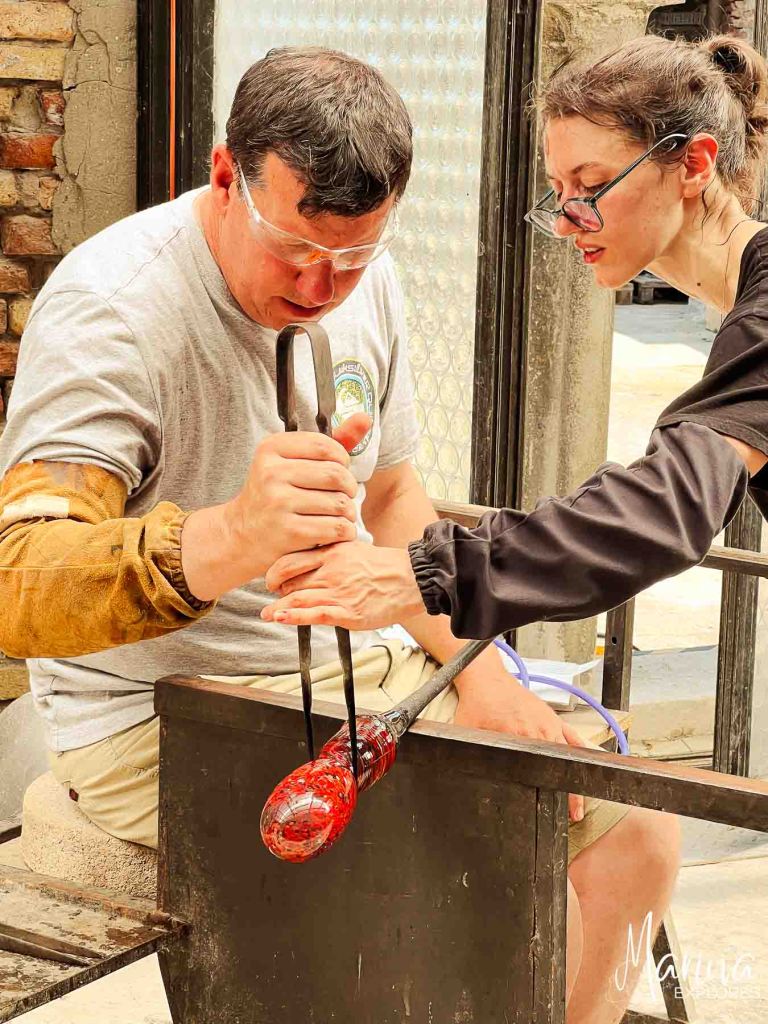
We spent one of our Venice days exploring Murano and Burano. On Murano, we took a hands-on glass-blowing workshop, which made the centuries-old tradition feel much more personal than simply watching a demonstration.
We actually got to work with the glass ourselves, and we came home with handmade souvenirs from the experience.
If you’d like to try it yourself, you can book a hands-on glass-blowing class.
Gondola Ride
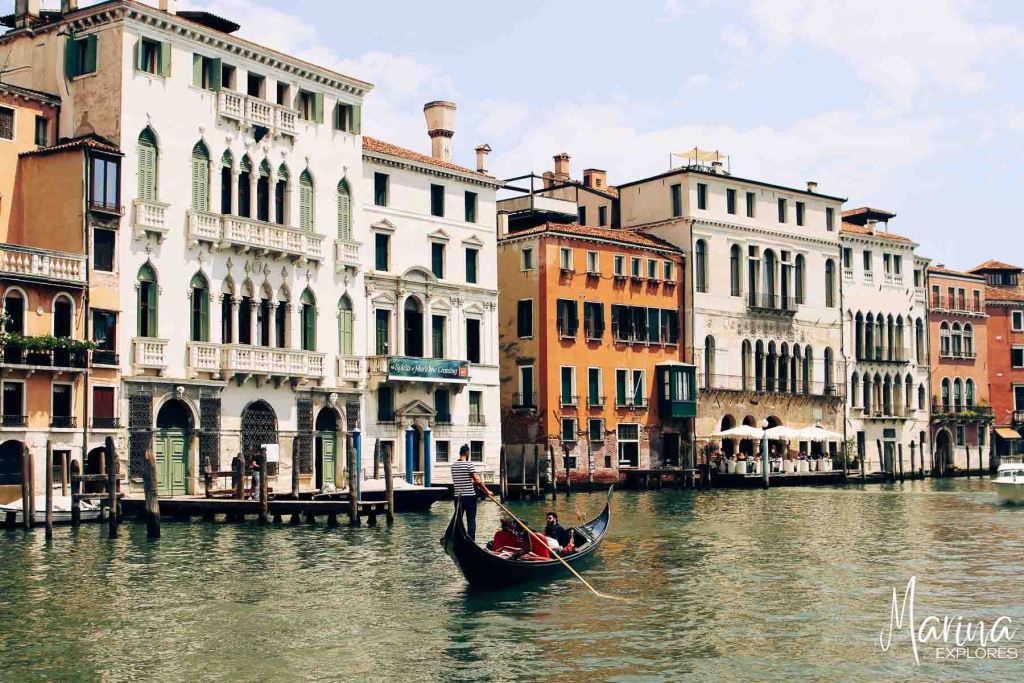
A gondola ride is touristy, but it’s also one of those Venice experiences we didn’t want to skip.
There are plenty of options for gondola rides, and the time of day and route can make a difference in the experience. We chose a sunset gondola ride, and it was everything we had hoped for.

If a gondola ride is on your Venice list, my Venice gondola guide shares more about when and where we took ours and what I’d consider when choosing a ride.
💡Save: Use a vaporetto as transportation and a sightseeing experience at the same time. Riding along the Grand Canal gives you some of the same views you’d otherwise pay for on a private boat.
💎 Splurge: A gondola ride. Yes, it’s touristy, but for us, it was one of the experiences that felt worth including in the budget.
What Worked Well
- Booking major tours in advance
- Splitting days into morning/afternoon blocks, with no more than one major tour or activity per day
- Leaving time for wandering and revisiting favorite spots
- Building some flexibility into our schedule instead of planning every minute
What I’d Change
- Flights: Fly into Rome and out of Venice to avoid spending a full travel day getting back to Rome
- Trains: Spend more time learning how Italy’s train tickets and schedules work before the trip
My biggest regret was our flights. I decided to fly round trip from Los Angeles to Rome because it was the least expensive option. It saved us money, but it cost us valuable time. We burned a full day taking a five-hour train from Venice back to Rome for our flight home.
If I planned the trip again, I’d fly into Rome and home from Venice. The open-jaw flights might have cost more, but I think the extra time in Italy would have been worth it.
My second regret was the train situation. Full disclosure: I’m a SoCal girl, born and raised. Public transportation isn’t really a thing here, so I had a lot of trepidation about navigating the trains in Italy.
For the most part, we did fine. But we did accidentally take trains going to the correct destination at a different time than the one on our ticket. We later found out that, depending on the ticket, we could have been fined for that. Whoops.
If you’re not used to traveling by train, I’d spend some time before your trip learning how Italian train tickets work, including which tickets are tied to a specific train and departure time.
Who This 17-Day Italy Itinerary Is Best For
- First time visitors to Italy
- Travelers planning a 2-3 week Italy itinerary
- People who are comfortable with trains, or willing to learn
- Sightseers who enjoy walking and a mix of major landmarks and less-touristy experiences
This 17-day itinerary allowed us to experience Italy for the first time without trying to see the entire country. We packed a lot into those 17 days, but we also had time to wander, eat plenty of pasta and gelato, and enjoy the experiences we’d been looking forward to for more than a year.
I hope our itinerary helps you plan your own trip—and gives you a realistic idea of what you can fit into 17 days in Italy.
Recommended Tours & Experiences
I’ve linked the tours and experiences we booked throughout this itinerary. Here’s a quick reference if you’re ready to start planning:
✔️Ready to book? My Guide to recommended tours:
- 🏛️Rome – Colosseum tour + Palatine Hill
- 🖼️Rome – Vatican early access tour w/ Sistine Chapel
- 😍Florence – Day trip to Tuscany (Siena, San Gimignano, & Pisa)
- 🍝Florence – Pasta making class
- 🍷Florence – Food tour
- 🍴Cinque Terre – famous pesto making class
- ⚓Cinque Terre – sunset boat tour
- 🏫Venice –St. Mark’s Basilica & Doge’s Palace tour
- ✨Venice – Murano Glass-Blowing workshop
- 🛶Venice – Gondola ride (booking ahead isn’t necessary, but this is an option if you’d rather have it arranged in advance)
Planning your trip to Italy? Save this article for later!

Planning Your Trip? Read Next: ✈️
- 3 Days in Rome: Itinerary – Ancient ruins, the Vatican, and sunset walks
- 5 Days in Florence: Itinerary – Art, food, and Tuscany day trips
- Cinque Terre in Two Days – Trails, towns, and local treats
- Best Way to Explore Venice – Vaporetto rides, gondolas, and hidden canals
- What to Wear in Italy in Summer – Packing tips for Rome, Florence, and Venice