Van Gogh Museum Amsterdam: What to See + Tips for Visiting
This post may contain affiliate links, which means I may earn a small commission at no extra cost to you.
We visited the Van Gogh Museum during our time in Amsterdam before our Rhine River cruise. If you’re planning a similar trip, you can see how we put our days together in my 3 Days in Amsterdam itinerary.
Our Van Gogh Museum Visit
We spent about 2 hours here and left with a great appreciation of Vincent van Gogh. I can sometimes find museums overwhelming, but to see the work of one artist was fascinating because you really got to see his evolution.
The Story Behind Van Gogh’s Paintings
One of the things I enjoyed about the Van Gogh Museum was learning more about the man behind the paintings. I knew the basic story of Van Gogh, but seeing his work alongside information about his life gave me a much better understanding of him.
His Relationship With His Brother Theo
Van Gogh came from a large family of six children, but he was particularly close to his younger brother, Theo. The museum has a large collection of letters exchanged between the brothers, which gives you a glimpse into their relationship.

Theo supported Vincent both emotionally and financially. Their correspondence also gives you a sense of just how much Theo believed in his brother and his work.
What Happened to Van Gogh’s Ear?
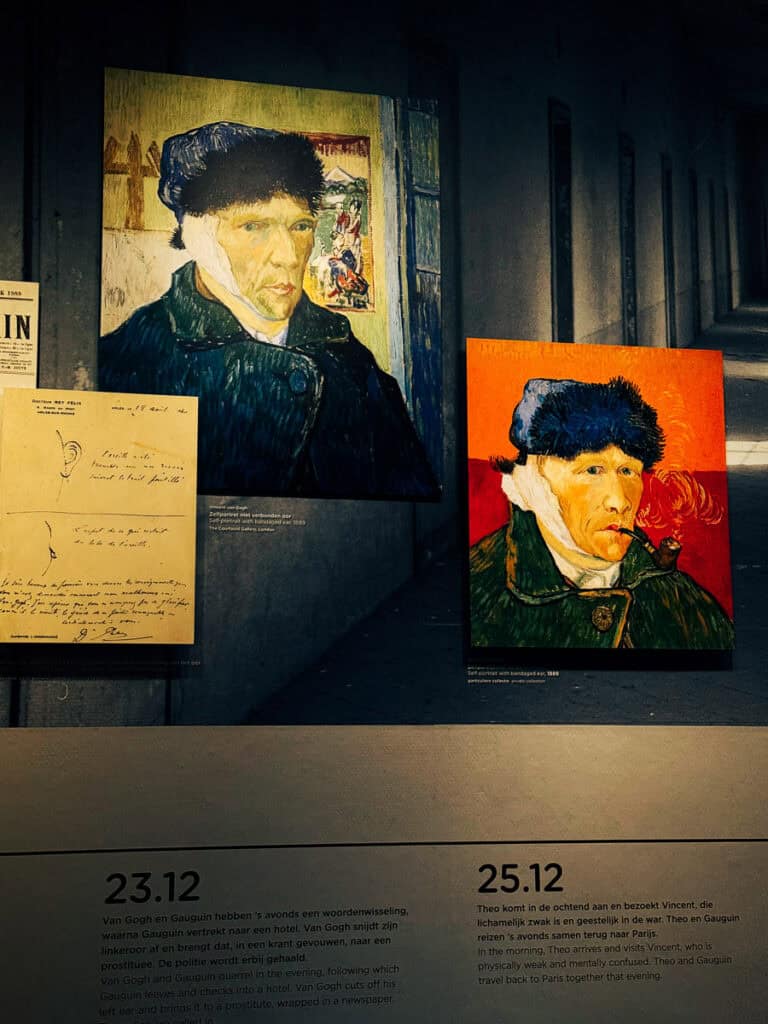
Van Gogh’s struggles with his mental health are an important part of his story, although historians and medical experts have never reached a definitive agreement about his exact diagnosis. His episodes of mental illness are well documented, as is his time receiving treatment at an asylum in Saint-Rémy.
The story of his ear is probably the part most people know. After a conflict with fellow artist Paul Gauguin, Van Gogh cut off part of his own left ear in December 1888.
I actually walked away from the museum really liking him. Learning more about his life made him feel less like the troubled artist I had always heard about and more like a real person who was struggling, creating, and trying to find his way.
The museum does a good job of putting his paintings into the context of what was happening in his life.
What is the Van Gogh Museum Like?

The Van Gogh Museum itself feels very modern, with giant windows bringing in lots of natural light. Throughout the museum, you’ll also find large projections of Van Gogh’s work, some with moving elements that bring the paintings to life.
There are three floors filled with Van Gogh’s work, along with a café, gift shop, and an area where you can store your bags. The museum is fairly strict about bag sizes, and only small bags are allowed in the galleries. This helps keep the walkways clear and prevents visitors from accidentally bumping into other people or the artwork.
Famous Van Gogh Paintings at the Van Gogh Museum
If you’re visiting the Van Gogh Museum hoping to see The Starry Night, there’s one important thing to know: it’s not here. Van Gogh’s famous painting is at the Museum of Modern Art in New York.
Fortunately, there’s plenty to see here. The Van Gogh Museum has one of the world’s largest collections of his work, so you get to see much more than just the paintings you’ve probably seen reproduced countless times.
Van Gogh Was a Master of Color

Van Gogh’s early work was much darker, with the muted, earthy colors common in his paintings from that period. The Potato Eaters is a good example.
After moving to France, Van Gogh was exposed to new artistic movements and began experimenting with brighter colors. He increasingly used color not just to represent what he saw, but to express emotion and create contrast.
One of the interesting things I learned was that he sometimes used pieces of colored yarn to experiment with different color combinations before committing expensive paint to a canvas.
Sunflowers

Sunflowers was one of the paintings I was most excited to see in person, and it did not disappoint.
The yellows are incredibly vibrant. I also found it interesting that the flowers aren’t pictured at their peak—they’re already beginning to wilt and fade. Van Gogh was interested in the concept of decay. Seeing the actual brushstrokes and colors in person made me appreciate the painting in a way that a reproduction simply can’t.
The Bedroom
The Bedroom depicts Van Gogh’s bedroom in the Yellow House in Arles, where he lived and worked. I initially assumed it was his room in the asylum, so I was surprised to learn otherwise.
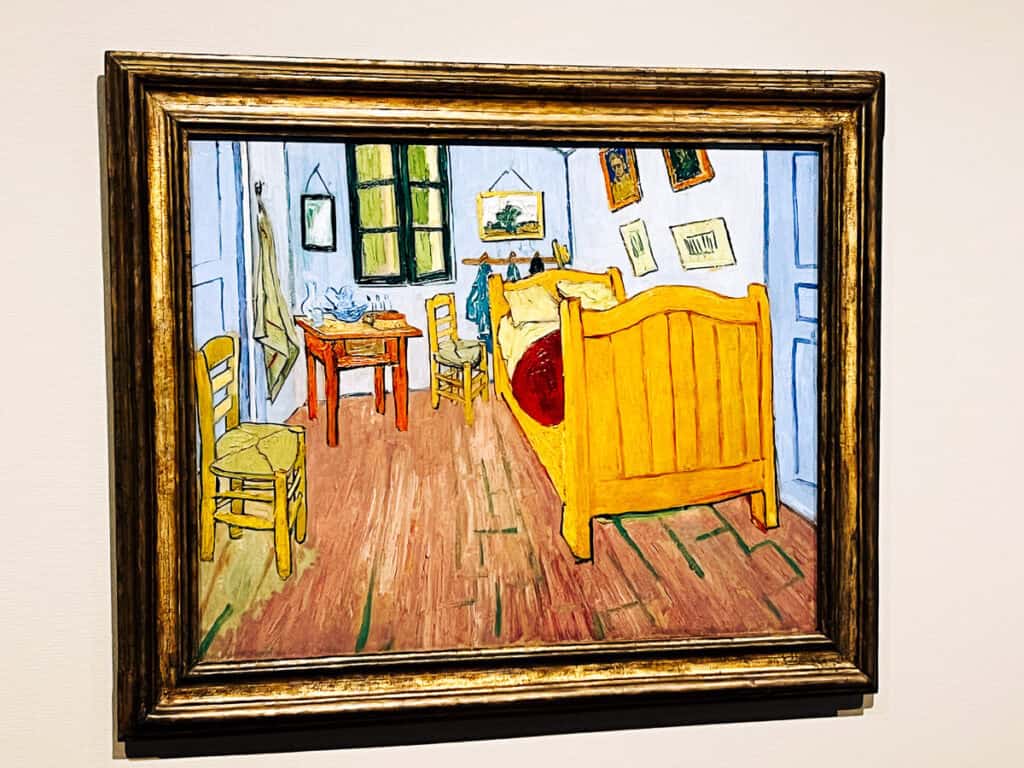
The audio guide urges visitors to look closely at the objects around the room, too. The hat and shirt near the bed appear in some of Van Gogh’s self-portraits, giving you another little connection between his paintings and his everyday life.
Van Gogh’s Self-Portraits

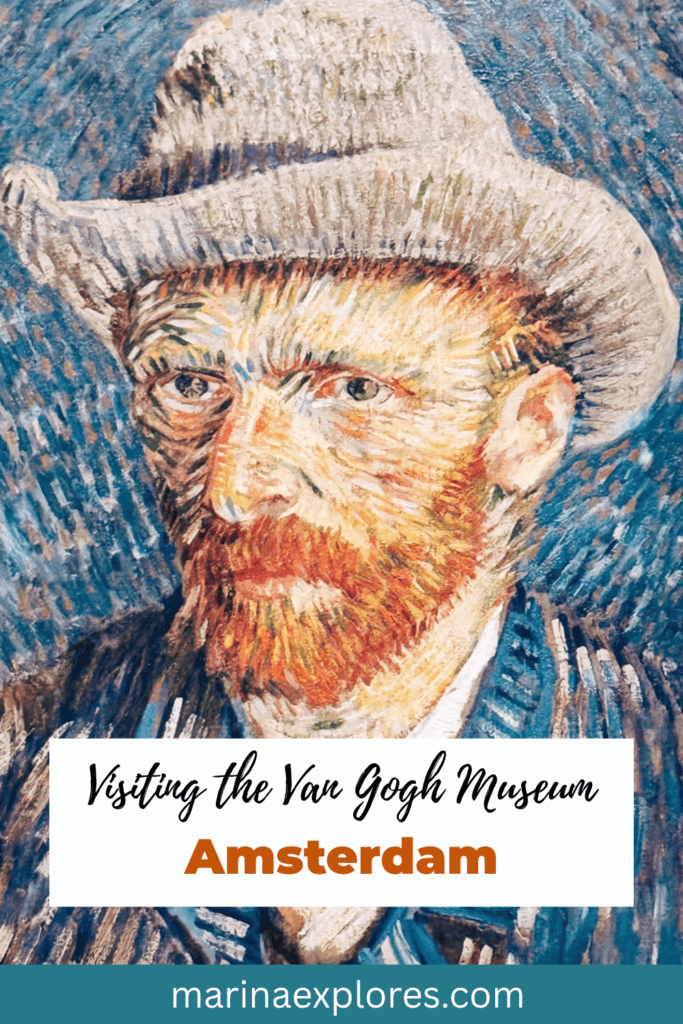
There are quite a few self-portraits throughout the museum, and the audio guide explained one very practical reason Van Gogh painted so many of them: hiring models cost money.
Painting himself gave Van Gogh a readily available model while also allowing him to experiment with color, brushwork, and different ways of depicting himself.
Irises
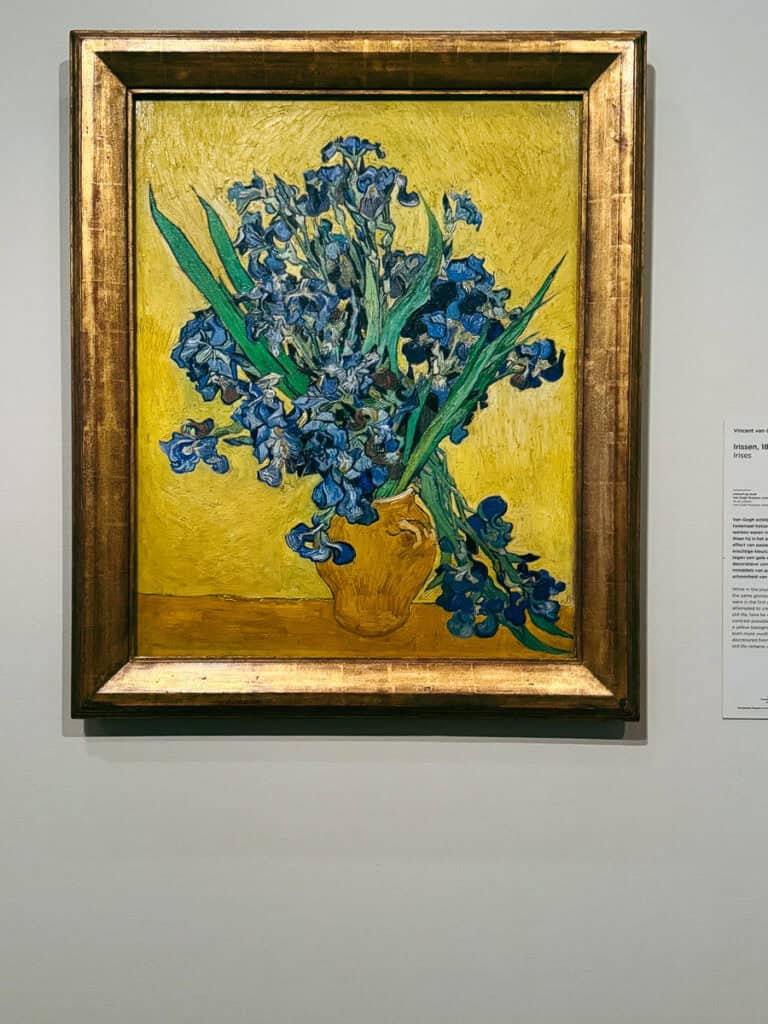
Irises is another great example of Van Gogh’s use of contrasting colors. The bright flowers stand out against the darker background, making the painting feel especially vibrant.
Like Sunflowers, it also shows Van Gogh’s interest in painting flowers at different stages rather than only when they were perfectly fresh and upright.
Almond Blossom
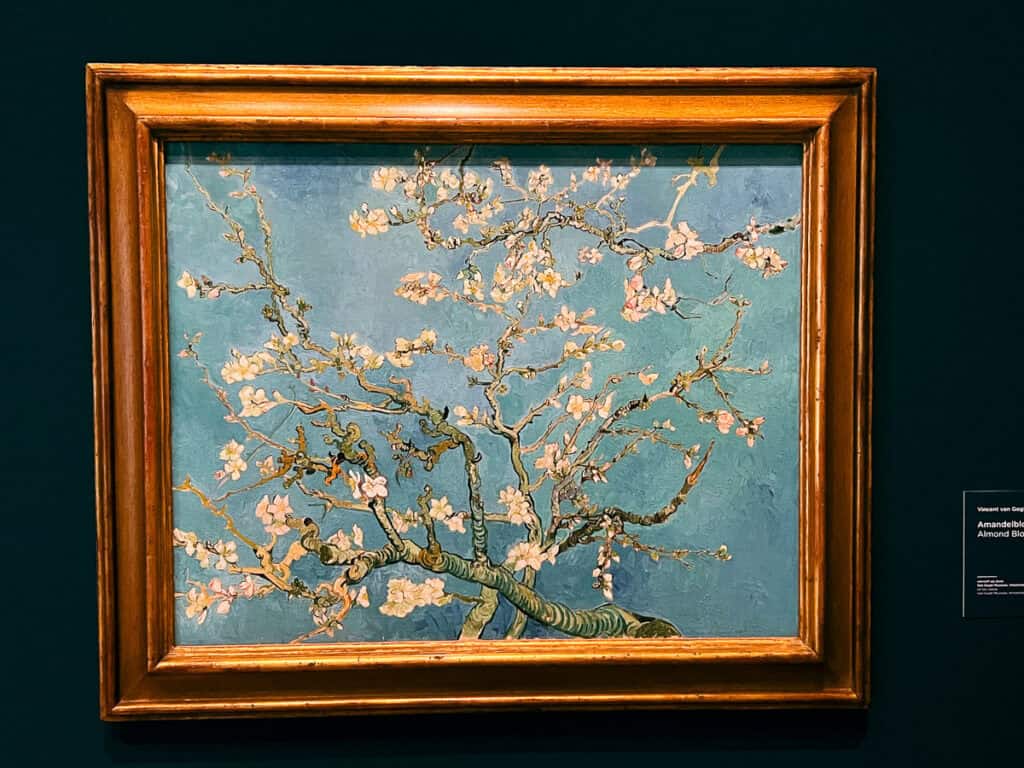
Almond Blossom has a particularly sweet story behind it.
Van Gogh painted it as a gift for his brother Theo and Theo’s wife, Jo, to celebrate the birth of their son, Vincent. They named their son after his uncle.
That Vincent Willem van Gogh would eventually become an important part of the creation of this museum makes the painting feel even more special. It isn’t just a beautiful painting of almond blossoms — it’s also connected to Van Gogh’s family and the legacy he left behind.
Tips for Visiting the Van Gogh Museum
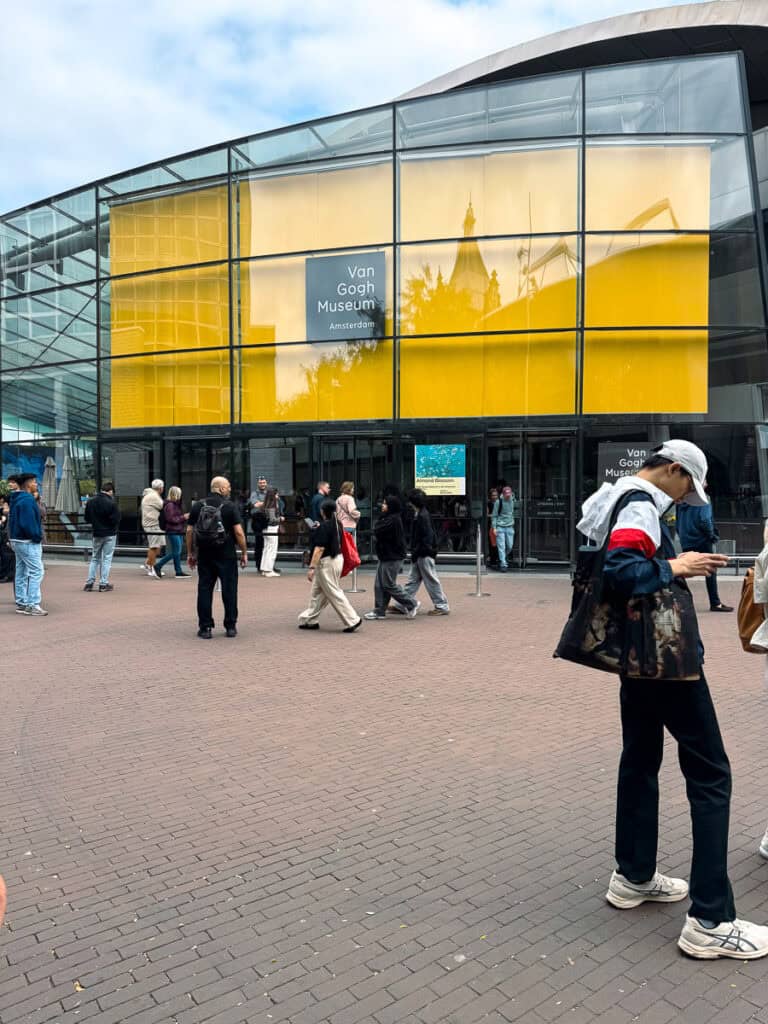
Buy Your Tickets in Advance
The Van Gogh Museum is popular, and tickets can sell out. When we visited, I even heard several people asking others in line if they had any extra tickets.
Tickets are timed, so I recommend booking your Van Gogh Museum tickets ahead of time rather than hoping you can get one when you arrive. Currently they are only sold online, not at the door.
Be Prepared to Store Your Bag
I was wearing a small backpack when we visited, but I was asked to put it in a locker because the water bottles sticking out of the side made the bag wider than they wanted in the galleries.
At the time of our visit, the lockers were free, with small, medium, and large sizes that you could choose yourself. None of them were large enough for luggage, so don’t plan on using the museum as a place to store your suitcase.
Note: The museum’s current visitor information says that luggage cannot be stored in the cloakroom, so if you’re visiting with larger bags, check the museum’s current storage policy before you go.
Give Yourself Enough Time
I’d plan on at least 1½ to 3 hours for the Van Gogh Museum.

There are three levels to explore, and you’ll probably want to take your time looking at the paintings, reading some of the information, and listening to the audio guide if you choose to use it. I spent about two hours here and felt like that gave me a good amount of time without feeling rushed.
Planning a visit to the Van Gogh Museum? Save this pin to Pinterest so you can find these tips when you’re ready to plan your Amsterdam trip!
Check for Interactive and Family Experiences
Even though I wasn’t visiting with children, I noticed several interactive elements throughout the museum that would make the experience more engaging for younger visitors.
The museum offers family audio guides and treasure hunts for different age groups, along with other family activities and workshops.
How to Get to the Van Gogh Museum From Amsterdam Centraal

We took public transportation from Amsterdam Centraal to the Van Gogh Museum. Our route involved a tram through the city, followed by the metro to Museumplein. From there, it was less than a five-minute walk to the museum.
One thing to remember when using public transportation in Amsterdam: tap in when you board and tap out when you leave. We used contactless payment for our rides, which made getting around pretty easy.
Is the Van Gogh Museum Worth Visiting?
I personally really enjoyed it. I didn’t know much about Van Gogh before our visit and was mostly familiar with his most famous paintings, but I walked away with a much deeper appreciation for his work — and for him as a person.
I especially enjoyed seeing how he used color and learning more about his relationship with his brother Theo and the rest of his family. I’m not usually someone who loves spending hours in museums, but this was different. Focusing on one artist made it easier for me to follow his story and appreciate how his work evolved.
If you’re visiting Amsterdam, I think the Van Gogh Museum is worth adding to your itinerary, even if you’re not an art expert.
Prefer a guided museum experience? If you’d rather have someone explain the artwork and Van Gogh’s story as you go, you can also take a guided Van Gogh Museum tour. This is a good option if you prefer having context provided as you move through the museum.
Planning Your Trip? Read Next: ✈️
- 3 Days in Amsterdam: Itinerary –Museums, canals, windmills & more
- Heineken Experience – Explore Heineken’s brewing history and taste a few along the way
- E-Bike Day Trip to Zaanse Schans – Explore Amsterdam’s countryside
- Viking Rhine River Cruise itinerary – Follow our journey from Amsterdam to Basel